Door Replacement
We're the company that talks people out of replacing doors — most days. But some doors are past the line, and when yours is, we'll say so plainly, show you both numbers, and do the replacement to a repairer's standard.
in writing
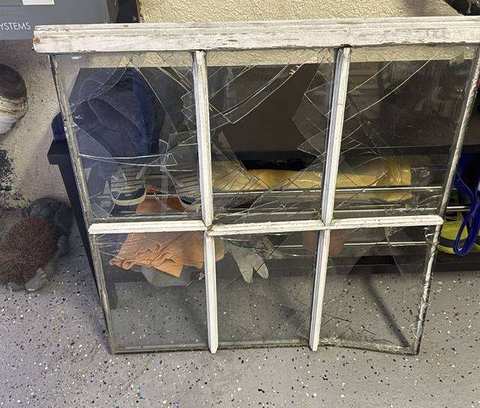 Before
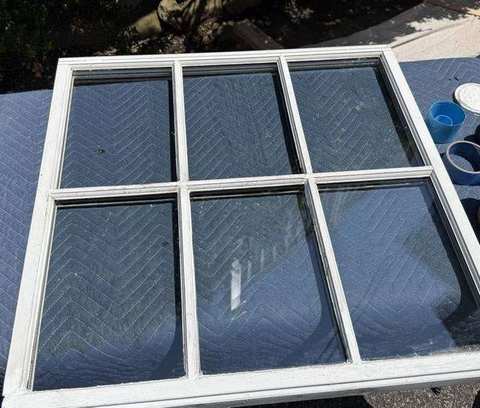 After
AfterBefore you replace it — is it actually past saving?
Most doors we're called to replace don't need replacing. Here's the comparison, so you can decide with both numbers in front of you.
Repair with RotGone
- Original wood stays — including profiles nobody manufactures anymore
- 1–2 weeks, not months of lead time
- Same sightlines, same glass line, same house
- 5-year workmanship warranty
Full replacement
- "5–8 windows for $23,000" works out to $2,900–4,600 each
- Vinyl swaps old-growth wood for plastic that can't be repaired later
- 4–8 weeks including manufacturing lead time
- Trim, sills and interior casing get rebuilt around the new unit
Prices depend on how far the decay actually goes — that's what the free assessment is for. And we'll tell you honestly when replacement really is the right call; it happens, and you'd rather hear it from us than find out afterwards.
"Replace the door" is four
different decisions. We price all four.
Repair wins
Sagging, sticking, drafts, worn thresholds, rot in the bottom foot of the frame, tired hardware. The vast majority of 'bad doors' — fixed for a fraction of replacement.
Most doors land hereReplace the frame part
Frame or sill rotted but the slab is sound — the frame section gets rebuilt or spliced while the door you own keeps its job.
Split decisionReplace the slab
Delaminated, split through, or hollow-core failing at the hinges — a new slab hung in your existing, healthy frame. Half the cost of a full unit.
Slab onlyReplace it all
Racked frame, structural rot past the halfway line, or a door that never fit its opening. The honest full replacement — with the repair number shown beside it.
The true minorityWhich verdict is yours? Send photos of the door, frame, and threshold — we'll call it the same day.
Replacement advice you can trust
comes from people who'd rather repair.
Every trade has a conflict of interest it doesn't advertise. In the door business, it's this: the person diagnosing your door usually sells doors. Every symptom — a draft, a stick, a soft spot in the frame — points, in the showroom's telling, toward the same $10,000+ prescription, because entry replacement projects are where the margin lives. We built this company on the opposite bet: that most of what gets replaced in New Jersey could have been repaired, and that homeowners would reward the company that told them so. 8+ years on, that's still the model — which is what makes our replacement advice unusual. When a repair-first company says your door is done, it's because the evidence overruled our own preference.
The evidence has a threshold, and we publish it: past the point where more than half the structural material is gone — frame rot climbing beyond splicing range, a slab split or delaminated beyond re-gluing, an opening racked so far the geometry can't be recovered — repair becomes the expensive sentimental option, and we'll tell you so. Below that threshold, we'll quote the repair and show you what it saves. Either way you see both numbers on one page, which is the whole trick: most bad decisions about doors are made by people who were only ever shown one number.
What the $10,000 actually buys — and when it's worth paying
A full entry replacement, done right, is real work: demolition, frame and threshold, flashing, trim inside and out, hardware, finishing — see the FAQ for the honest itemization. Paying for all that makes sense exactly when the underlying door system has broadly failed, because then every dollar addresses something actually broken. It makes no sense when one component failed — which is the usual case, and why the door repair page exists and stays busier than this one. The in-between cases are where our four-verdict framework earns its keep: a sound slab in a rotted frame gets a frame repair (its own craft); a failed slab in a sound frame gets a slab-only swap at roughly half the full-unit cost. Matching the scope to the failure, rather than rounding every failure up to the maximum project, is most of what "honest" means in this trade.
Doors worth replacing well — and doors worth building
When replacement is the verdict, quality decisions still matter. Materials each have honest trade-offs — solid wood for repairability and looks, fiberglass for dimensional stability in exposed southern faces, steel for garage-to-house fire separations — and we'll recommend by exposure and use, not by what's on a truck. For the older housing stock we serve across Westfield, Montclair, and West Caldwell, there's a further option most contractors never mention because they can't offer it: when no stock door fits or suits the house, we build the door — custom replication, milled to the opening and the original's pattern, from the same shop that replicates windows. And the installation itself is where our repair DNA pays you back directly: pan-flashed threshold, shingle-lapped flashing, sealed and drained correctly — detailed in the FAQ — because the most expensive thing about a new door is the rot repair a careless installation schedules for a decade later. We've done enough of those repairs on other people's installs to refuse to create the next one.
The full entry replacement project — quoted to every door with every symptom, because it's the only number the showroom has.
Maximum project, regardless of failureRepair at ~80% less where repair wins; slab-only, frame-only, or full replacement where it doesn't — both prices in writing, every time.
Scope matched to the actual failureThe questions a showroom
hopes you won't ask.
How do you decide whether a door should be repaired or replaced?
With the same published rule we apply to windows: when more than half the structural material is compromised — rot through the frame and sill, joinery failed throughout, a slab delaminated past re-gluing — replacement is the honest call, because rebuilding the majority of a door costs more than building one. Below that line, repair wins, usually by a wide margin. The important part is who runs the test. A door showroom's answer to every symptom is a new door, because that's the product on the truck; our revenue runs the other way — every door we replace is a door we didn't repair — so when we say "replace," the conclusion fought uphill against our own business model to get to you. The assessment that produces the verdict is free, happens within 1–2 days, and ends with both numbers in writing: the repair scope line by line, and the replacement figure beside it. You decide with the facts in hand.
Why do entry door replacement quotes run $10,000 and up?
Because "replacing a door" almost never means just the door. The quoted project typically includes the slab, a new frame and threshold, demolition of the old unit, correcting whatever the tear-out reveals in the surrounding framing, new interior and exterior trim, flashing and sealing, hardware, finishing, and disposal — plus sidelites and transoms if the entry has them, which multiply both glass and labor. Premium materials push it further: a solid wood or high-end fiberglass entry system is a four-figure item before anyone picks up a tool. None of this is dishonest pricing; a full entry replacement genuinely is that much work. The dishonesty, when it happens, is upstream — prescribing that project to a door whose actual failure is a worn threshold or a rotted frame corner that a targeted repair would fix for roughly 80% less. That prescription gap is the entire reason this page leads with the decision framework instead of a product catalog.
Can you replace just the door slab and keep my existing frame?
Yes — slab-only replacement is one of the trade's best-kept economies, and we recommend it whenever the frame is healthy. The frame, threshold, trim, and flashing stay; a new slab is fitted to the opening: hinges mortised to match or re-set cleanly, lockset bored to position, edges beveled and sealed, gaps balanced so the door closes on an even reveal. It's meaningfully less than a full-unit project because it skips demolition, framing, trim, and most of the finishing. Two honest caveats. First, the frame must actually be square and sound — hanging a new slab in a racked or rotted frame builds a problem into the repair, which is why we assess the frame before quoting the slab. Second, an out-of-square opening can often be corrected first (that's repair work) and then receive its new slab. If the old slab is worth keeping at all, remember that repair remains on the table: solid doors take repair beautifully — see door repair — and pre-war doors are usually worth the effort on material quality alone.
My house is old and no stock door fits the opening. What are my options?
You've met the problem replication solves. Older homes — pre-war houses in Montclair, Westfield, and across northern NJ — were built with doors sized and styled to the house, not to a distributor's warehouse: taller openings, non-standard widths, panel layouts and moldings no catalog carries. The industry's workaround is ugly: reframe the opening smaller to fit a stock door, which costs real money and permanently changes the face of the house. Our alternative is building the door to the opening — custom replication, milled to match the original's dimensions, panel pattern, and profiles, using the same shop craft as our window replication work. For historic homes it's often paired with historic door restoration: restore the original if it survives, replicate it faithfully if it doesn't. A replicated door costs more than a stock slab and dramatically less than reframing plus a premium entry system — and it's the only option on the list that leaves the house looking like itself.
If I do replace the door, what does RotGone do differently on the installation?
We install like a company that repairs failed installations for a living — because we are one. The rot we rebuild at door frames traces overwhelmingly to installation-day shortcuts: no sill pan under the threshold, flashing lapped backwards or skipped, gaps foamed for insulation but never sealed against water, thresholds set unsupported so they flex and open joints. Our installs answer each of those specifically: pan flashing under the threshold with a back dam, shingle-lapped flashing at the sides and head, a supported and sealed threshold, air-sealing inside, drainage outside, and hardware aligned so the door latches and seals without persuasion. The new unit's manufacturer covers the door; our 5-year workmanship warranty covers the workmanship that determines whether the wall around it stays dry — the part no product warranty touches. Crew fully insured, photos answered the same day, most projects complete within 1–2 weeks of the unit arriving, Mon–Fri 8:00 AM – 6:00 PM.
The repairs that beat
this page, most days.
Get the verdict before
you get the invoice.
Photos of the door, the frame, and the threshold are enough for a same-day read — repair, partial, or full replacement, with real numbers on each.