Foggy Glass Replacement
That haze between the panes isn't dirt and it isn't doom — it's a failed edge seal in a replaceable glass unit. We swap the unit; your window stays on the wall.
replacement
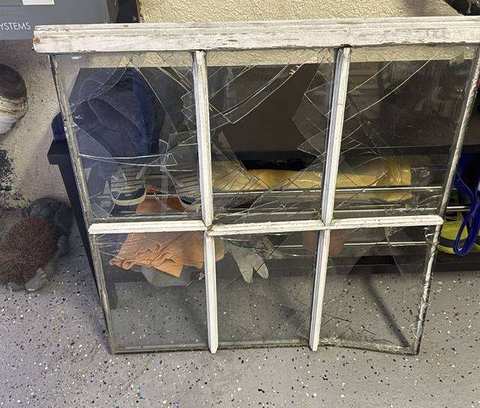 Before
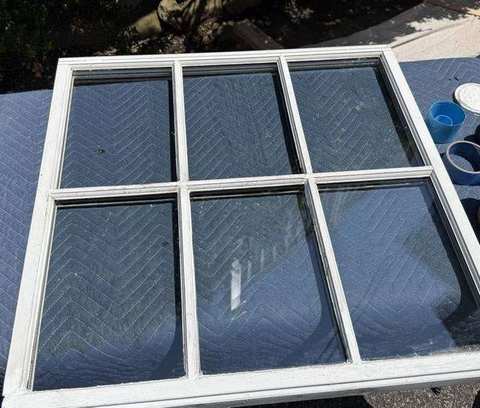 After
AfterWindow condensation between panes:
annoying symptom, simple cause.
Foggy glass may be the single most misdiagnosed problem in the window business. Homeowners in Montclair, Millburn, and Westfield notice a milky haze or beads of condensation between panes, search for answers, and land in the replacement funnel — where foggy windows are presented as proof the windows have "failed." They haven't. One manufactured component inside each foggy window has failed: the insulated glass unit's edge seal. The wood or vinyl around it, the hardware, the fit in the wall — all still doing their jobs.
We treat foggy window glass replacement as what it is: a parts swap. The fogged sealed unit comes out of the sash; a new one, manufactured to the exact dimensions and spec of the original, goes in. Most units are swapped without the window ever leaving the wall. The insulating cavity is restored, the low-E coating is fresh, and the view is glass-clear again — for a price that makes the "just replace them all" conversation sound as strange as it should.
Three clues it's seal failure (not humidity in the house)
- You can't wipe it from either side — the moisture is between the panes, in the sealed cavity
- It comes and goes with the weather — worst on cold mornings and bright afternoons, when temperature swings drive condensation cycles
- White etching or mineral rings — long-failed units leave hard-water ghosts on the inner surfaces even when dry
Condensation on the room side of the glass is a different story — that's indoor humidity meeting a cold surface, and it often improves with the fresh unit's restored insulation. Send a photo either way: telling the two apart takes us seconds, and the answer arrives the same day, free. Fully insured crew, 5-year workmanship warranty, 5.0 on Google.
Foggy glass service for Montclair, Glen Ridge, Millburn, Chatham, Summit, Livingston, Wayne & Westfield · from West Caldwell, NJ · Mon–Fri 8:00 AM – 6:00 PM · (973) 564-0958
Foggy glass is the replacement industry's favorite doorway — a cosmetic symptom upsold into a whole-house project that starts around $23,000.
For a failed sealA new sealed unit made to your window's exact size, installed in the existing sash — 80% less than replacement.
Clarity & insulation restoredThe fog took years to appear.
It leaves in one visit.
Photograph the fog
Shoot the window in daylight so the haze shows. We confirm seal failure and quote a range the same day.
Same dayMeasure & spec
Exact cavity dimensions, glass thickness, low-E and argon spec matched to the original unit.
Within 1–2 daysSwap the unit
Your custom sealed unit arrives; we remove the fogged one and glaze in the new — clear glass, restored insulation.
1–2 weeksPrefer to talk first? Call (973) 564-0958 — Mon–Fri, 8 AM–6 PM.
Why good windows go cloudy —
and why that's not fatal.
Understanding the failure is the best defense against being sold a window over it.
An insulated glass unit is a sealed system: two panes, an aluminum or composite spacer, a bead of desiccant, and a perimeter of sealant, usually with argon gas in the cavity. The seal is the working part — and the wearing part. Every day, sun and temperature cycles pump the unit like a slow bellows: the cavity gas expands, presses the panes, contracts, pulls them back. Thousands of cycles fatigue the sealant until a capillary crack opens somewhere along the edge.
From that moment the failure is chemical, not visual. Humid air seeps in with each cycle; the desiccant absorbs it silently — sometimes for years. The day you first see fog is the day the desiccant reached saturation, which is why fog seems to "appear overnight" on a window that's looked fine for a decade. The argon is long gone by then, and with it a share of the insulating value; the fog is just the announcement. None of this touches the sash or frame, which is exactly why the honest repair is the unit, not the window. We replace it with a fresh sealed unit — new desiccant, new seal, optional upgraded low-E — and the window returns to full service.
The fix matches the failure — that's the whole philosophy.
Everything trapped between
those two panes, explained.
Why is there fog between my window panes I can't wipe off?
Because it's inside the sealed unit. A double-pane window is two sheets of glass bonded around a spacer, with a desiccant inside the spacer keeping the cavity dry. Years of thermal expansion — every sunny winter morning flexes the unit — eventually crack the perimeter seal. Humid air leaks in, the desiccant saturates, and from then on every temperature swing condenses moisture on the inner glass surfaces. No cloth can reach it, because the fog lives in the cavity. The unit is done; the window around it is fine.
Can a fogged window be fixed without replacing the whole window?
Yes — that's the entire point of this page. The insulated glass unit is a self-contained part held in the sash by stops or gaskets. We measure it, order an identical new sealed unit made to your dimensions, and swap it. Frame, sash, hardware, trim, siding, and interior finishes are untouched. The "whole window" answer you may have heard is the replacement industry's answer, not a technical requirement.
What about defogging services that drill the glass?
We don't offer them, honestly, because the physics don't hold. Drill-and-vent services can clear visible moisture temporarily, but the seal is still broken, the desiccant is still spent, and the argon fill and its insulating value are already gone. The haze returns, often with mineral staining baked onto the inner surfaces. Replacing the sealed unit costs more than drilling but fixes the actual failure — and it's the version we can stand behind with a 5-year workmanship warranty.
How much does foggy glass replacement cost?
It's priced per unit, driven by size and glass spec (tempered, low-E, argon). A typical residential unit is a low-hundreds repair — a small fraction of the four-figure replacement window quote the same fog usually triggers, consistent with the roughly 80% savings across our repair work. Multiple fogged windows done in one visit share the trip and labor, so per-window cost drops. The written estimate is free and shows the replacement-window number alongside for contrast.
My sliding patio door is fogged. Same fix?
Same fix, bigger cartridge. Patio and French door panels are large tempered insulated units, and they fail the same way window units do — seal first, fog second. We measure, order the tempered unit, and re-glaze the panel, usually without removing the door from its track for more than the swap itself. Fogged patio door glass is one of our most common calls in Livingston, Chatham, and Summit.
More ways we keep glass
in its frame.
Send us a photo — get a real answer today
Tell us what's going on and attach a picture of the damage. We'll tell you honestly whether it's rot, whether it can be repaired, and roughly what it costs.
The view is behind
that fog. Take it back.
Photograph every hazy window in the house and send them together. One visit, new sealed units, clear glass — for a fraction of the replacement quote.