Epoxy Wood Repair & Consolidation
The conservation-grade method that turns rot-softened wood back into structure — liquid resin deep in the grain, not filler smeared on top. It's how we save sills, frames, and trim for about 80% less than replacement.
replacement
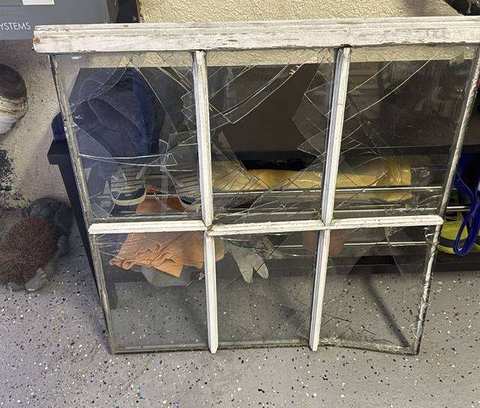 Before
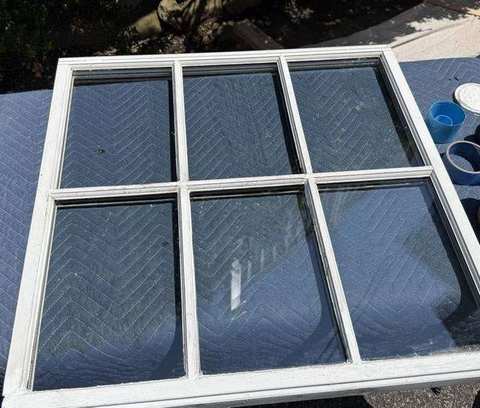 After
AfterFiller hides rot.
Consolidation reverses it.
Half the "wood repairs" we're called to redo look the same: a crescent of beige filler curling out of a windowsill like a dry scab, paint cracked along its edge, soft wood underneath. Somebody treated rot as a hole to be filled. But rot isn't a hole — it's wood whose cell structure a fungus has partially digested. The fix isn't covering the damage; it's restoring structure to the fibers that remain and rebuilding only what's truly gone. That is exactly what epoxy consolidation does, and it's worth understanding why it works, because the difference between consolidation and filler is the difference between a repair that outlasts the paint and one that fails by the second winter.
How consolidation works: resin where the strength used to be
Sound wood is a bundle of cellulose straws bound together by lignin. Rot fungi eat that binder, which is why decayed wood feels punky — the straws are still there, but nothing is holding them stiff. A penetrating epoxy consolidant is a thin, two-part resin engineered to wick into that open structure the way water does, following the grain deep into the softened zone. When it cures, it does what the lignin used to do: locks the fibers into a rigid, load-bearing matrix, now bonded seamlessly to the sound wood behind it. Over that base we build back the missing profile with a structural epoxy paste — carvable, plane-able, sandable — shaped to the element's original lines. Cured epoxy is more moisture-stable than the wood around it and completely indigestible to fungus. The repaired zone doesn't just match the original; in hardness and rot resistance it exceeds it.
Why the hardware-store shortcut fails
One-part fillers and auto-body putties fail at this job for reasons baked into their chemistry. They don't penetrate, so they bridge over weak fiber instead of reinforcing it. Most shrink as they cure, opening a micro-gap that reads as a hairline crack in the paint within a season. They're typically stiffer or softer than wood in all the wrong ways, so seasonal movement shears the bond. And because they go on fast, they usually go on over rot nobody excavated and moisture nobody dried — sealing the fungus in with its food supply. The patch pops, the rot resumes, and a year later the "repaired" sill is worse than before the repair. When we consolidate, the decayed material comes out first, the wood is dried, and the resin becomes part of the element rather than a plug in it.
Conservation-grade means exactly that
Epoxy consolidation wasn't invented for quick handyman fixes — it came out of architectural conservation, where the mandate is to preserve original historic fabric on buildings that cannot legally or ethically be gutted. The same class of systems we use on a Livingston windowsill is used on landmark courthouses, museum window walls, and pre-war estates, precisely because it saves original material and lasts for decades under paint. For the 1900s–1930s housing stock we work on in Montclair, Glen Ridge, and Maplewood, that pedigree matters twice over: the old-growth wood in those homes is denser and straighter than anything at a lumberyard today, and consolidation is the method that lets you keep it. RotGone applies it as a specialist trade — fully insured, backed by a 5-year workmanship warranty, at roughly 80% less than the replacement quote the rot would otherwise trigger.
Epoxy or dutchman? The honest decision rule
Consolidation is one of two conservation methods we practice, and choosing between them is most of the diagnosis. The rule we work by: epoxy consolidates what still has structure; a dutchman replaces what doesn't. Softened-but-intact fiber, shallow decay pockets, rebuilt corners and edges — that's epoxy territory. A sill end you can crumble in your fist, a hollowed post base, a long visible run destined for clear finish — there we splice in matching wood instead, because that's what lasts and looks right. Many repairs use both within the same element. You don't need to make that call yourself: text a photo to (973) 564-0958 and we'll tell you the same day which method your wood needs, assess onsite within 1–2 days, and complete most repairs within 1–2 weeks.
Structural epoxy wood repair across Essex, Morris & Union counties — Montclair, Glen Ridge, Livingston, Millburn & beyond · Based in West Caldwell · Mon–Fri 8:00 AM – 6:00 PM
A full wood-window replacement project — the standard answer to rot that often lives in a few cubic inches of one sill.
A whole unit for a soft cornerResin, skill, and a day or two of labor rebuild exactly what failed — 80% less than replacement, with a 5-year workmanship warranty.
Harder than the original woodWhat an epoxy repair
actually involves.
Diagnose & excavate
Photo triage first, then onsite probing to map the decay. We cut out loose, decayed fiber and dry the substrate — epoxy over wet rot is a countdown, not a repair.
Photo: same day · Onsite: 1–2 daysConsolidate & rebuild
Penetrating consolidant saturates the remaining softened grain and cures it solid. Structural epoxy paste then rebuilds the missing profile, shaped to the original lines.
The core of the craftSeal, finish, warranty
We close the water path that caused the rot, then prime and paint. The repair disappears — and carries our 5-year workmanship warranty.
Done within 1–2 weeksPrefer to talk first? Call (973) 564-0958 — Mon–Fri, 8 AM–6 PM.
The questions every skeptic
of "wood glue" should ask.
Is epoxy wood repair actually structural, or is it cosmetic?
Genuinely structural — when the right materials are used the right way. A penetrating consolidant doesn't sit on top of the wood; it soaks down into the softened fibers and cures throughout them, turning a spongy zone back into a rigid one that's bonded to the sound wood around it. The structural paste that rebuilds the missing profile then anchors into that consolidated base, not into loose punk wood. The result carries load, holds screws, and can be planed, drilled, and sanded like lumber. This is why architectural conservators specify epoxy consolidation on load-bearing elements of landmark buildings rather than treating it as a cosmetic patch. The distinction that matters isn't epoxy vs. wood — it's conservation-grade two-part systems applied to dried, prepared wood vs. a tub of hardware-store filler smeared over damp rot. The first is a repair; the second is a countdown.
Why did my previous wood filler repair crack and fall out?
Because filler and wood are strangers to each other. One-part fillers cure by evaporation, so they shrink as they dry — the first hairline gap around the patch appears before the paint does. They're rigid in the wrong way, too: wood swells and contracts with every NJ humidity swing, the filler doesn't, and the bond line fatigues until the plug pops loose. Worst of all, most filler jobs go over rot that was never removed or dried, so the fungus keeps eating behind the patch. Two-part epoxy systems behave differently on every count: they cure by chemical reaction with virtually no shrinkage, the consolidant penetrates the grain so there is no discrete bond line to fail, and we only apply them after cutting out decayed material and drying the substrate. If your last repair failed in two winters, the material — not the concept — was the problem.
How long does an epoxy wood repair last?
Properly done, it routinely outlasts the paint applied over it — cured epoxy is more moisture-stable than the surrounding wood and gives rot fungus literally nothing to digest, so the repaired zone itself cannot rot again. The realistic long-term risks are elsewhere: new water intrusion attacking un-treated wood next to the repair, or a failed paint film letting UV work on exposed resin. That's why our repairs include sealing the water path that caused the decay and finishing with primer and paint, and why we tell every customer the same thing — keep paint on it and epoxy repair is effectively permanent. We back the workmanship with our 5-year workmanship warranty, the same coverage we put on every repair we do. Conservation labs have decades of field history with these systems on museum-grade buildings; your sill is an easier assignment than a landmark cupola.
What does epoxy repair cost compared with replacing the wood or the whole unit?
It's the economics that make consolidation so compelling. The materials are premium, but the quantities are small — what you're really buying is skilled labor on precisely the cubic inches that failed, instead of manufacturing, freight, demolition, and installation of an entire assembly. Repairing a rotted element typically runs about 80% less than replacing the unit it belongs to: a consolidated sill costs a fraction of the window a replacement contractor would sell you, and a full wood-window replacement project in our area runs $23,000 and up. Between epoxy and a dutchman splice, prices are usually comparable — we choose the method by what the wood needs, not by margin. Text a photo to (973) 564-0958 and you'll have a straight answer and a realistic range the same day; the onsite assessment and written estimate are free.
When is epoxy the wrong choice — and what do you use instead?
Epoxy needs something to consolidate. If decay has hollowed a sill end or a post base so completely that there's no fiber structure left to receive the resin, saturating mush accomplishes nothing — the honest repair is a dutchman: cut back to sound wood and splice in a new section of matching species and grain. We also lean away from epoxy on long, highly visible runs that will be finished clear rather than painted, where a wood-to-wood splice looks right, and on elements so far gone that replicating the entire part in our shop is cleaner than rebuilding it in place. Most real-world jobs end up hybrid — a spliced-in section with consolidated edges, or epoxy rebuilding a corner beside a new dutchman. The assessment exists precisely to make that call element by element, and our estimate tells you which method we'll use where, and why.
One method, many patients.
Send us a photo — get a real answer today
Tell us what's going on and attach a picture of the damage. We'll tell you honestly whether it's rot, whether it can be repaired, and roughly what it costs.
Rot softened it.
Chemistry can harden it.
Text a photo of the soft spot before anyone talks you into a dumpster. We'll tell you the same day whether consolidation will save it.