Dutchman Repair & Wood Splicing
The oldest honest repair in carpentry: cut the rot out, graft matched wood in, make the joint disappear. When a section is too far gone for epoxy, this is how we save the element — at about 80% less than replacing it.
replacement
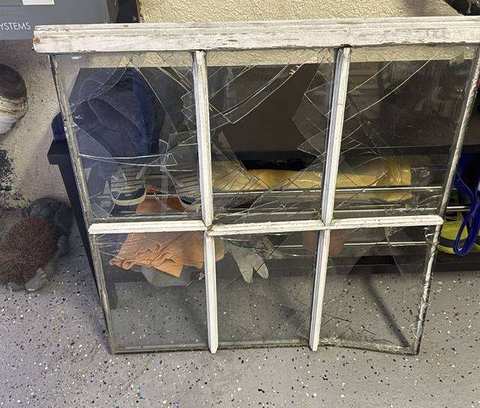 Before
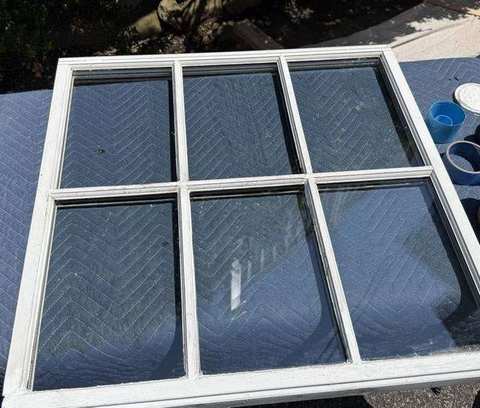 After
AfterReplacement is a modern habit.
Splicing is the older answer.
Walk through any pre-war neighborhood in Essex County and you're looking at wood that has already been repaired — you just can't see it. Somewhere in those sills, jambs, and porch columns are grafts set by carpenters generations ago: sections of matched wood let in where rot or damage had taken hold, planed flush, painted over, and forgotten because they never failed. The trade calls that graft a dutchman. It's what skilled carpenters did before the replacement industry existed, because throwing away a whole element over one bad section would have struck them as absurd. It still is. We practice that same joinery today, with better adhesives than they had — and it remains the most durable answer ever devised to localized rot in good wood.
The craft, honestly described
A dutchman repair is simple to describe and demanding to execute. First, the decay is cut out — not scooped or gouged, but cut back to fully sound wood in a deliberate geometric shape with flat, true faces, because the joint can only be as good as the surfaces it's glued on. Then the graft is made: stock of the same species, chosen so density and ring pattern sit close to the original, cut so the grain runs the same way. The fit is the whole game — a dutchman should need persuasion to seat, not gap-filling adhesive to hide behind. Glued, clamped, and reinforced with fasteners where structure demands it, the new wood is then planed and shaped until the element's original profile runs through it without interruption. Prime, paint, done. What remains is not a patch on the element but a new section of it.
Why grain matching is engineering, not vanity
The detail that separates a lasting splice from a future callback is invisible on day one: grain orientation. Wood is not a static material — it swells and shrinks across the grain with every swing of New Jersey humidity, moving little along its length and much across it. Set a graft with its grain crossing the host's and the two pieces pull against each other every season until the glue line surrenders. Set the grain in agreement and they move as one, which is why a correct dutchman stays tight through decades of freeze–thaw. Species matters for the same reason: matched wood shares movement rates, hardness, and how it takes finish. This is the kind of judgment a vinyl-window salesman has no reason to possess — and the reason splice work belongs to a repair specialist.
When splicing beats epoxy — and when it doesn't
We practice both conservation methods, so we have no thumb on the scale. Splicing is the right call when the damaged section has lost its structure entirely — epoxy consolidation needs intact fiber to reinforce, and a crumbled sill end offers none. It's also right where loads are high and we want continuous wood, and on clear-finished elements where resin would show. Epoxy earns its keep on shallow decay, softened-but-whole zones, and intricate profile rebuilds. Most real jobs blend the two: a dutchman bedded against consolidated wood is a textbook RotGone repair. Either way the price logic holds — targeted repair runs about 80% less than the replacement unit the rot would otherwise force, and every estimate shows both numbers.
The method historic buildings insist on
There's a reason preservation standards favor in-kind wood repair: it keeps original fabric in place. In Glen Ridge — where the entire town sits within a historic district — and in the older streets of Montclair, Morristown, and Madison, spliced repair is how original windows, doors, and porch elements stay original while becoming sound again. The old-growth lumber in those homes is denser and more rot-resistant than anything commercially milled today; a dutchman preserves it by the board-foot instead of sending it to a dumpster. RotGone is fully insured, our splice work carries a 5-year workmanship warranty, and the process starts with one text: photo to (973) 564-0958, answer the same day, assessment within 1–2 days, repair typically complete within 1–2 weeks.
Dutchman repair & wood splicing for Glen Ridge, Montclair, Morristown, Madison, Summit & all of northern NJ · West Caldwell workshop · Mon–Fri 8:00 AM – 6:00 PM
A rotted sill end or jamb base becomes a quote for a new window or door — $10,000+ for entry doors, $23,000+ for whole-house windows.
95% sound wood, 100% discardedA matched splice rebuilds only the failed section — 80% less than replacement, joined to last, covered by our 5-year workmanship warranty.
The original element, whole againHow a graft becomes
part of the wood.
Cut back to sound wood
We probe the decay's true extent, then cut a clean geometric recess with flat reference faces — no soft fiber left behind to fail under the new joint.
Assessed within 1–2 daysShape & fit the dutchman
Matching species, matching grain direction, fitted to the recess with hand-tool tolerances. Glued on long-grain surfaces and mechanically reinforced where the load demands.
The joinery dayFair, seal & finish
The graft is planed flush, profiles are carried through, the water path that caused the rot is closed, and the element is primed and painted.
Complete within 1–2 weeksPrefer to talk first? Call (973) 564-0958 — Mon–Fri, 8 AM–6 PM.
Everything homeowners ask
about the graft.
What exactly is a 'dutchman' in woodworking?
A dutchman is a precisely fitted piece of new wood let into an element to replace a damaged section — the woodworking equivalent of a graft. The carpenter cuts the decayed or broken area back to clean, sound wood, leaving a geometric recess with flat, true surfaces, then shapes a patch of matching species to fill that recess exactly, glues and often mechanically fastens it, and works it flush until it follows the original profile. The term has been in the trade for well over a century, and the technique itself is far older — it's how furniture makers, shipwrights, and restoration carpenters have always repaired good wood without discarding it. On a house, dutchmen show up in sills, door jambs, sash rails, porch columns, and anywhere else rot takes a bite out of an otherwise sound element. Done well, the joint is airtight and, under paint, invisible.
Will I see the patch? How do you match the grain?
Under a painted finish, a properly executed dutchman disappears completely — what telegraphs a bad patch is a proud edge, a glue line, or filler shrinking around a sloppy fit, and tight joinery eliminates all three. For clear-finished or stained wood, matching is a genuine craft discipline: we select stock of the same species, cut it so the grain runs in the same direction and at a similar ring density, and orient the piece so its figure continues the original's lines rather than interrupting them. Grain orientation matters for more than looks — wood moves with the seasons along predictable axes, and a splice whose grain agrees with its host expands and contracts with it instead of fighting it. That agreement is why hundred-year-old dutchmen in old homes are still tight while mismatched patches from a decade ago are already telegraphing their outlines through the finish.
When is a dutchman better than an epoxy repair?
Splicing wins whenever the damaged section no longer has enough intact fiber for a consolidant to reinforce — resin needs structure to soak into, and a crumbled sill end or hollowed post base offers none. It also wins on long or highly stressed runs where we'd rather have continuous wood carrying the load, on elements that will be finished clear where wood should meet wood, and on historic work where preservation practice favors in-kind material. Epoxy takes the lead on shallow decay pockets, softened-but-intact zones, and sculpted profile rebuilds where carving resin is cleaner than sawing a tiny graft. In practice most of our repairs are hybrids — a spliced section with consolidated edges, or a dutchman bedded against epoxy-hardened wood. We make the call element by element during the assessment, and the written estimate names the method for each repair so you know exactly what you're buying.
Is a spliced repair strong enough for structural parts like sills and posts?
Yes — a correct splice restores the element to service strength, which is why the method survives in the most demanding corners of the trade: ship restoration, timber framing, and landmark building conservation. Strength comes from three things working together. The joint geometry — scarfs, laps, and keyed cuts — creates generous long-grain gluing surface, and modern structural adhesives on long-grain joints are stronger than the wood fibers around them. Mechanical reinforcement — screws, dowels, or pegs where the load case calls for them — backs up the glue line. And matched grain orientation means the new wood shares seasonal movement instead of stressing the bond. A sill with a well-executed spliced end carries the sash and sheds water exactly as the original did. Every structural splice we make is covered by our 5-year workmanship warranty, the same as the rest of our work.
What does dutchman repair cost, and how long does it take?
You're paying for careful joinery on one section of one element — not for a manufactured unit, freight, demolition, and disposal — so the number lands about 80% below the replacement quote the same rot would otherwise generate. A spliced sill end or jamb base is a few-hundred-dollar class of repair; the window or door assembly it saves is a four-to-five-figure purchase. Where several elements need grafts we price the scope as a whole, and the estimate always shows the repair figure beside a realistic replacement figure. Timeline: text a photo of the damage to (973) 564-0958 and you'll have an answer the same day; we assess onsite within 1–2 days; and most splicing work — including sourcing matched stock — is complete within 1–2 weeks of approval. On-site time for a typical dutchman is a day, plus finish.
Where this craft gets used.
Send us a photo — get a real answer today
Tell us what's going on and attach a picture of the damage. We'll tell you honestly whether it's rot, whether it can be repaired, and roughly what it costs.
Carpenters solved rot
centuries ago. We still do.
Before a soft sill end turns into a replacement contract, send us a photo. If it can be spliced, we'll tell you today — with the price.