Historic Door Restoration
The front door is the one piece of millwork every visitor touches — the handshake of a pre-war home. We restore original doors to sound, smooth, weathertight service: wood repaired, hardware preserved, profiles replicated where needed, at about 80% less than replacement.
replacement
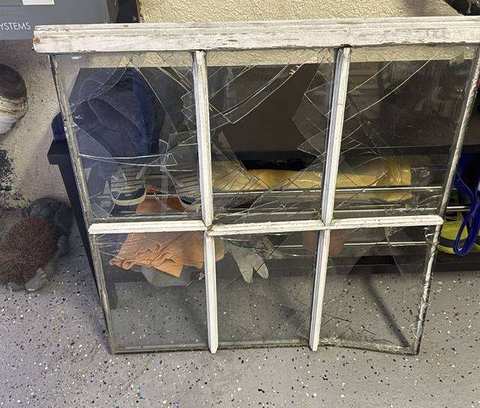 Before
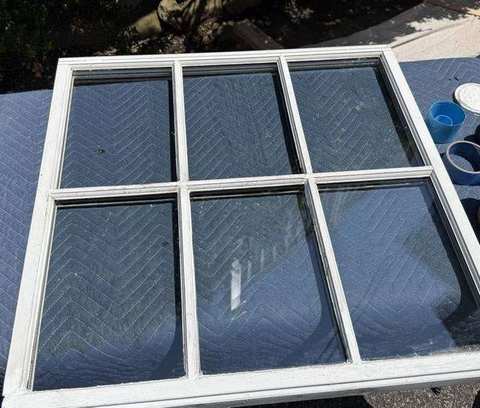 After
AfterEvery house has one piece of millwork
that is the house.
It's the front door. Photographs of the house frame it; guests judge the whole building by the swing and sound of it; real estate listings lead with it. On the pre-war homes of Montclair, Morristown, Madison, and Glen Ridge, that door was made for its opening — solid old-growth stiles and rails joined with mortise and tenon, raised panels proportioned to the facade, hung on heavy hinges with a lockset machined like an instrument. Which is why a rotted bottom rail or a sagging hinge stile puts homeowners in a bind: the replacement industry answers with a catalog, but no catalog page was designed for your 1912 entry. Restoration answers with the door you already have — repaired, tuned, and rehung to greet another generation.
Where old doors fail — and why it's nearly always fixable
Doors fail from the bottom, at the joints, and at the frame — rarely everywhere at once. Water bouncing off the sill soaks the lower rail and the end grain of the stiles, and rot follows; we cure it with epoxy consolidation where fiber survives and dutchman splices where it doesn't. Seasonal racking loosens mortise-and-tenon joints until the door sags and scrapes; we re-glue and square them rather than shaving the door thinner year after year, the way generations of quick fixes tend to. And the frame rots in sympathy — jamb bases and thresholds sitting in the same splash zone — so we repair the opening as a unit. A door that binds, whistles, or weeps at the bottom is not asking to be replaced. It's asking for a carpenter who knows which of these three things went wrong.
Hardware: the soul stays with the door
Nothing dates a botched renovation like a shiny big-box handleset on a hundred-year-old door. Original mortise locks, cast knobs, escutcheons, and ball-bearing hinges are almost always serviceable — seized by paint and hardened grease, not worn out — and we disassemble, clean, and tune them as part of the restoration rather than selling you their replacements. Keys can often be fitted to original locks; strikes get realigned so the latch clicks home without shoulder pressure. When a part is genuinely gone, we source period-appropriate hardware that belongs on the door. It's a small discipline with a large payoff: the door not only looks original, it feels original in the hand — which is the entire point of restoring it.
Replication, for what's past saving
Some doors reach us missing pieces of themselves — a panel split beyond repair, a rail crumbled to punk, sidelight muntins long gone. There the craft shifts from repair to replication: new elements made to the original profiles, thickness, and fielding, so the finished door reads as one continuous piece of work rather than a patchwork. In historic districts this matters doubly, since exterior changes face commission review and matched replication is the approach preservation guidelines favor. It's also the honest economics: replicating a rail costs a fraction of a $10,000+ custom door, and our overall restoration pricing lands about 80% below replacement — from a fully insured crew, with every repair carrying our 5-year workmanship warranty. Text a photo of your door to (973) 564-0958; you'll have an answer the same day, an assessment within 1–2 days, and in most cases a finished door within 1–2 weeks.
Historic door restoration for Montclair, Glen Ridge, Morristown, Madison, Summit & pre-war homes throughout northern NJ · West Caldwell, NJ · Mon–Fri 8:00 AM – 6:00 PM
A quality entry-door replacement, installed — trading solid old-growth construction for a thinner modern unit that never quite fits the facade.
The handshake, outsourcedRot repaired, joints tightened, hardware serviced, finish renewed — 80% less than replacement, with our 5-year workmanship warranty.
Same door, another centuryAssessed as a system:
door, frame, hardware, weather.
Photo the door & frame
Shots of the door, the bottom rail, and the jamb bases give us the diagnosis: what's rot, what's wear, what's just failed finish.
Answer same dayAssessment & written scope
We probe the wood, test the hardware, check the fit and swing, and hand you a per-item scope with restoration priced beside replacement.
Within 1–2 daysRestore, rehang, seal
Consolidation and splicing on the wood, hardware serviced and reinstalled, weatherstripping fitted, finish renewed. Your entry is never left unsecured.
1–2 weeksPrefer to talk first? Call (973) 564-0958 — Mon–Fri, 8 AM–6 PM.
Asked at front doors
across pre-war New Jersey.
Can you save my original hardware — the mortise lock, knobs, and hinges?
In most cases, yes — and we treat that as a priority, not an afterthought. Pre-war door hardware was built as mechanism, not merchandise: cast bronze and brass knobs, mortise locksets with machined internals, ball-bearing hinges sized for doors twice the weight of modern ones. Most "failed" hardware is actually seized — decades of paint, dried grease, and a misaligned strike doing the damage — and responds to careful disassembly, cleaning, and adjustment. Worn springs and followers inside mortise locks can often be serviced or matched from specialist suppliers, and paint-caked hinges usually clean up to working order. Where a component is truly beyond saving, we source period-appropriate replacements rather than defaulting to a big-box handleset that would look wrong in a hundred-year-old stile. Original hardware belongs with its original door; keeping the two together is half the character of a restored entry.
The bottom of my door and the frame are rotted. Is that restorable?
That's the most common condition we see, and it's squarely restorable. Doors rot from the bottom up because that's where water lands and lingers — rain bounces off the sill onto the lower rail, snow piles against the threshold, and end grain at the stile bottoms wicks moisture like a straw bundle. The repair follows the damage: softened-but-intact wood is hardened with penetrating epoxy consolidation; sections that have lost structure are cut back and replaced with dutchman splices of matching species — a spliced-in stile base or a rebuilt rail edge is classic restoration joinery. The frame gets the same treatment, since jamb bases and sills rot in sympathy with the door. Critically, we also fix the cause: sealing the water path, adjusting the fit, and renewing the finish so the bottom edge sheds rather than absorbs. The door you grew up closing stays on its hinges, covered by our 5-year workmanship warranty.
What if parts of the door are too far gone — or the door is missing entirely?
Then we replicate — the element, not the whole ensemble, whenever possible. Restoration's ladder runs: consolidate what's softened, splice what's lost, and replicate only what no longer exists to save. A destroyed panel can be made anew to the original thickness and fielding; a crumbled bottom rail can be remade with the same sticking profile so the new work reads as original; and when an entire door is missing or hopeless, we can build its replacement to match the surviving evidence — dimensions from the opening, profiles from sister doors in the house, proportions from the era. Replication done this way is invisible in the streetscape, which is what matters on a pre-war facade and to any historic-district review. What we won't do is casually swap a hundred-year-old opening to fit a stock slab; the opening was cut for that door, and the craft runs the other direction.
Is restoring an old entry door worth it compared with buying a new one?
Run the comparison honestly and restoration wins on both money and merit. A quality entry-door replacement is a $10,000+ project once the unit, demolition, and installation land — and what arrives is thinner-skinned than what left, because pre-war doors were built from old-growth lumber in solid mortise-and-tenon construction that today exists only at custom-shop prices. Restoration typically runs about 80% less than replacement, and it preserves things no catalog offers: the raised-panel proportions matched to your facade, the patina of original hardware, the heft of a door with a century of service left in it. Resale logic points the same way — an original restored entry is a selling feature on a pre-war home, while an obvious modern swap reads as a compromise. Every estimate we write shows the restoration figure beside a realistic replacement figure, so the decision is yours with the numbers in view.
How long does door restoration take, and can I use my door meanwhile?
The rhythm matches the rest of our work: text photos of the door to (973) 564-0958 and get an answer the same day; onsite assessment within 1–2 days; restoration complete within 1–2 weeks of approval in most cases. Much of the work — rot repair on the frame, weatherstripping, hardware service, fit adjustment — happens with the door in place, so your entry works normally each evening. When a door needs shop work, such as panel replication or major splicing, we plan around security: work is sequenced so the opening is never left unsecured, and the door is rehung weathertight at the end of each phase. We schedule Mon–Fri, 8 AM–6 PM. It's a faster timeline than a custom replacement order, which routinely spends longer than that waiting in a factory queue before anyone touches your house.
Restoration, opening by opening.
Send us a photo — get a real answer today
Tell us what's going on and attach a picture of the damage. We'll tell you honestly whether it's rot, whether it can be repaired, and roughly what it costs.
A hundred years of welcomes.
Worth one phone call.
Before you price a new door, photograph the old one. We'll tell you honestly what it needs, what we'd save, and what both paths cost.