Marvin Window Repair
Marvin builds some of the finest wood windows in America — which is exactly why they deserve repair, not a dumpster. We fix the failed component and keep the window, at about 80% less than replacement.
replacement
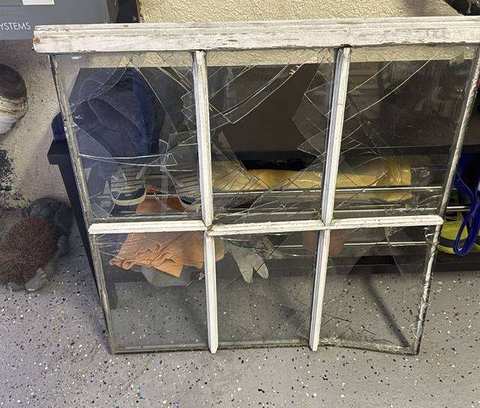 Before
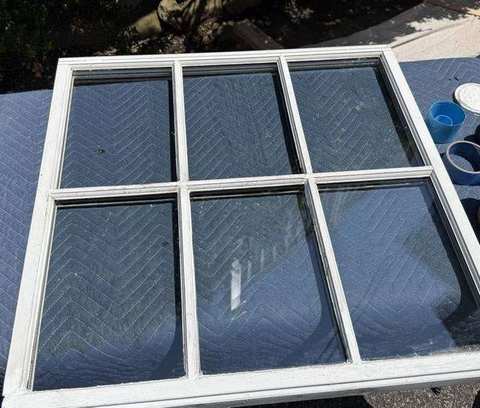 After
AfterWhy a Marvin window deserves repair, not replacement
When a homeowner in Montclair or Summit tells us their windows are Marvin, the diagnosis conversation changes before we've seen a photo. Marvin's wood windows — the Ultimate line and today's Signature collection, in both all-wood and aluminum-clad wood construction — are joinery-heavy, precisely milled units built from quality stock. These are windows that cost serious money new and were engineered for a long service life. When one fails, it almost never fails as a whole. A bottom rail rots. A glass unit fogs. A clad joint lets water past. One component gives out while the other 90 percent of the window remains exactly as good as the day it was installed. Replacing the entire unit over one failed part is the most expensive possible response — and with Marvin, the arithmetic is more lopsided than with any builder-grade brand, because the replacement unit costs so much more.
The Marvin lines we see across northern NJ
The houses of Glen Ridge, Millburn, and Morristown are full of Marvin — it has long been the architect's default for renovations and additions that need real wood windows. Most of what we service falls into a few families: Ultimate double-hungs and casements, the flagship wood line, frequently ordered with an extruded aluminum-clad exterior; the Signature collection that carries that flagship forward today; and older all-wood Marvin units from the '80s and '90s, often with true or simulated divided lites. The common thread is a wood interior worth preserving — clear-finished or painted, with profiles that match the trim around them. That interior face is exactly what an insert replacement throws away, and exactly what a component repair keeps.
Where Marvin windows commonly fail in the field
Field patterns, not lab claims — this is what we commonly find on New Jersey Marvins. On clad units, the quiet spot is the clad-to-wood transition: sealant at a corner or sill joint ages out, water slips behind the aluminum, and the first visible symptom is a soft spot or peeling finish on the interior side years later. On all-wood units, we often see classic exposure rot at the sash bottom rail and sill nosing, where paint fails first and water sits longest. Insulated glass seals are a service item on any brand — south- and west-facing elevations fog first as the edge seal fatigues. And on older units, operators, locks, and balances wear out or leave production, which is a sourcing problem, not a window problem. None of these failures condemns the unit. Each is a known repair with a known fix.
Repair keeps what makes the window a Marvin
There's a matching problem that replacement salesmen don't mention: if you replace one failed Marvin in a room of healthy ones, the new window has to match the old ones — profile, sightlines, finish, lite pattern. If the original series has been superseded, an exact match may no longer exist at any price, and a near-miss is visible from the curb forever. Repair sidesteps the entire problem. The rebuilt rail carries the original profile because we shape it to the original profile; the replacement IGU sits in the original sash; the refinished interior matches because it is the original interior. For discontinued lines this is often the only path that preserves the room's appearance at all.
The process is the same one we run on every wood window in our care, tuned for Marvin construction: photo answer the same day, onsite assessment within 1–2 days, repair completed within 1–2 weeks, at a typical saving of about 80% versus replacement — every job by a fully insured crew, every repair covered by our 5-year workmanship warranty.
Marvin window repair for Montclair, Glen Ridge, Millburn, Summit, Morristown & all of northern NJ · West Caldwell HQ · Mon–Fri 8:00 AM – 6:00 PM · (973) 564-0958
A new clad-wood Marvin, installed, is a four-figure line item — per window — plus lead time, demolition, and interior patching.
Paying twice for wood you already ownRebuild the rail, replace the IGU, free the hardware — 80% less than swapping the unit, backed by a 5-year workmanship warranty.
The same window, working againDiagnosed by people who know
how a Marvin goes together.
Text a photo
A shot of the damage — and the corner of the glass if you can see an etched logo. Same-day answer on what failed and whether it's repairable.
Same dayOnsite assessment
We check the clad joints, probe the rails and sill, test the hardware, and inspect the glass seals — the whole unit, not just the visible symptom.
Within 1–2 daysComponent repair
Rot rebuilt, IGU replaced, cladding re-sealed, hardware sourced or adapted. The window operates and sheds water the way Marvin intended.
1–2 weeksPrefer to talk first? Call (973) 564-0958 — Mon–Fri, 8 AM–6 PM.
The cladding protects the wood —
until it hides the rot.
Repairing clad-wood windows well means working on both sides of the aluminum skin.
An aluminum-clad Marvin fails differently from a bare wood window. The extruded cladding shrugs off sun and rain for decades, so owners assume the wood behind it is equally immortal. But every clad window has joints — at the corners, at the sill horn, where the cladding meets the jamb — and when a sealant line at one of those joints ages out, water gets behind the aluminum and can't easily get back out. The wood stays damp in the dark, and by the time discoloration or softness shows on the interior face, the decay has usually been working for several seasons.
Our repair sequence respects that construction. We lift or remove the affected cladding rather than smashing through it, expose the full extent of the decayed wood, and rebuild it — penetrating epoxy consolidation where sound fibers remain to anchor it, a spliced dutchman of matching stock where they don't. Then the step most handymen skip: we correct the entry point, re-bedding and re-sealing the clad joint so the assembly sheds water again. Fixing the wood without fixing the joint is a two-year repair. Fixing both is why ours carries a 5-year workmanship warranty.
Wood repaired, entry point corrected — so the same failure doesn't come back.
What Marvin owners ask
before saving their windows.
Will repairing my Marvin window void the warranty?
No. A repair done properly doesn't void what remains of the manufacturer's warranty on other components — fixing a rotted bottom rail has no bearing on coverage for, say, the hardware or the glass unit elsewhere in the window. It's also worth saying plainly: most of the Marvin windows we're called about are already past their warranty age, which is precisely why the owner is choosing between a repair bill and a replacement bill in the first place. In that situation there is nothing left to void — only a very good window worth keeping. We stand behind our own work with a 5-year workmanship warranty, and we're fully insured.
Can you repair rot in an aluminum-clad Marvin window?
Yes — this is the single most common Marvin repair we perform. The aluminum cladding protects the exterior face, but water that finds its way past a clad joint or a sealant line gets trapped against the wood behind it, where it stays damp and invisible. We remove or lift the affected cladding section, cut out or consolidate the decayed wood, rebuild the profile with structural epoxy or a spliced-in piece of matching stock, then re-seat and re-seal the cladding. Done correctly, the repaired area sheds water better than it did originally, because the failure point that let water in is corrected at the same time.
My Marvin glass is foggy. Do I need a whole new sash?
Almost never. Fog between the panes means the insulated glass unit's edge seal failed — a glass problem, not a wood problem. The sash around it is usually perfectly sound. We measure the IGU, order a matching unit with the correct thickness and spacer, and glaze it into your existing sash. The window keeps its original profiles, finish, and divided-lite pattern, and you skip the cost of a factory sash — if one is even still offered for your series. Send a photo and we'll confirm the same day whether it's a straightforward IGU swap.
My Marvin windows are from the 1990s and the line is discontinued. Can you still get parts?
This is where repair specialists earn their keep. Wood components we don't need a catalog for — rails, stiles, sill sections, and stops are repaired in place or replicated in our shop to match the original profile. Hardware is different: some older operators and locks are genuinely out of production, so we cross-match from specialist suppliers who stock legacy window hardware, or adapt a current-production equivalent to fit. Between those two approaches, a discontinued line almost never means an unrepairable window. It usually just means the manufacturer's answer defaults to "replace" — ours doesn't.
What does Marvin window repair cost compared with replacement?
Marvin sits at the premium end of the market, so replacement math is punishing: a single new clad-wood unit, installed, routinely lands well into four figures, and a house full of them is a five-figure project. Repairing the component that actually failed — a rail, a sill nose, an IGU, a lock — typically runs about 80% less than replacing the window. Every estimate we write shows both numbers side by side so you can decide with the full picture. The photo answer is free and arrives the same day; the onsite assessment happens within 1–2 days.
The same craft, by component.
Send us a photo — get a real answer today
Tell us what's going on and attach a picture of the damage. We'll tell you honestly whether it's rot, whether it can be repaired, and roughly what it costs.
A Marvin is worth fixing.
Let's prove it with a number.
Text a photo of the damage. We'll name the failed component and price the repair the same day — free, and usually about 80% less than the replacement quote.