Rotten Window Frame Repair
The frame is where window rot starts — and the reason contractors quote you a whole new window. We repair the rotted section of the frame itself, in place, for about 80% less than replacement.
replacement
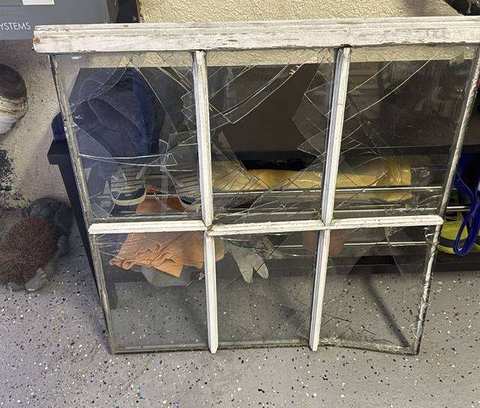 Before
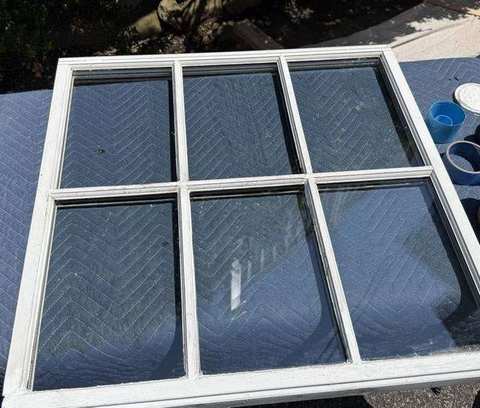 After
AfterNobody told you it could be repaired.
Most homeowners hear one option — replacement — because that's what the company at the door sells. Here's the comparison nobody hands you.
Repair with RotGone
- Original wood stays — including profiles nobody manufactures anymore
- 1–2 weeks, not months of lead time
- Same sightlines, same glass line, same house
- 5-year workmanship warranty
Full replacement
- "5–8 windows for $23,000" works out to $2,900–4,600 each
- Vinyl swaps old-growth wood for plastic that can't be repaired later
- 4–8 weeks including manufacturing lead time
- Trim, sills and interior casing get rebuilt around the new unit
Prices depend on how far the decay actually goes — that's what the free assessment is for. And we'll tell you honestly when replacement really is the right call; it happens, and you'd rather hear it from us than find out afterwards.
Press a screwdriver into the corner.
That's the whole diagnosis.
Go to the window you're worried about and press the tip of a screwdriver into the bottom corner of the frame, where the side jamb meets the sill. Sound wood pushes back. Rotted wood lets the tip sink in with almost no resistance, the way a cork does. If yours sank, you have window frame rot — and you're standing at the exact spot where it almost always begins, because that joint is where rainwater running down the jamb collects, sits, and slowly feeds the fungus that's been softening the wood underneath an intact-looking coat of paint.
Here's what that probe test doesn't tell you, and what the replacement salesman won't: how far the rot actually goes. In the hundreds of water damaged window frames we've opened up across Montclair, Livingston, Essex Fells, and our home base of West Caldwell, the pattern is remarkably consistent — decay concentrated in the lower six to ten inches of the frame, with sound, dense, old-growth wood everywhere else. A frame that's 90% healthy does not need to become landfill. It needs the 10% rebuilt.
The signs you already noticed (and maybe ignored)
- Paint that keeps failing in one spot — bubbling or peeling at a lower corner while the rest of the frame holds paint fine. The moisture is coming from inside the wood.
- Dark or greenish staining along the bottom of the frame or where casing meets sill — the visible edge of a wet zone.
- A spongy feel when you press the wood with a thumbnail, or trim that dents like cardboard.
- Gaps opening at the joints — rot shrinks as it dries, pulling mitered corners apart.
- Cracked or crumbling wood in cube-like patterns: classic dry rot, which despite the name is still a moisture problem.
Any one of these is enough to justify a photo to us. All of them together still doesn't mean the window is dead — it means the frame has been drinking water for a few seasons and nobody had interrupted it yet.
Why the frame is rot's favorite target
Of everything we repair — sashes, sills, doors, decks — the window frame is the single most common failure point, and the physics explain why. The frame is the fixed perimeter that everything else drains toward. Water sheds off the glass, off the sash, off the casing, and every path ends at the frame's lower joints. Add New Jersey's freeze–thaw cycles, which pump water deeper into every hairline paint crack each winter, and the bottom of the frame becomes a sponge that never fully dries between storms. End grain at the joints wicks moisture ten times faster than face grain, which is why rot blooms at corners first. None of this is a defect in your window. It's simply where the water goes — and it's completely repairable when caught before the decay crosses into the structural members on every side.
Repairing the frame beats replacing the window — on every axis
Wood window frame repair keeps the original opening exactly as the builder made it: no downsized glass area from an insert window, no vinyl in a 1920s facade, no demolition of interior plaster and exterior trim, no eight-week factory lead time. Financially it isn't close — repairing rotted frames across a whole house typically costs about 80% less than the replacement project, and those projects start north of $23,000. And structurally, the old-growth lumber in a pre-war frame is tighter-grained and naturally more rot-resistant than nearly anything sold today; the smart move is to keep it and fix the corner, not discard it because of the corner. We back that logic with a 5-year workmanship warranty, we're fully insured, and our Google rating stands at 5.0.
Serving Montclair, Livingston, Essex Fells, Glen Ridge and surrounding towns from West Caldwell · Mon–Fri 8:00 AM – 6:00 PM · Call (973) 564-0958
What full window replacement projects run in northern NJ — often triggered by rot in one frame corner per window.
Sound wood thrown awayWe rebuild only the decayed section of each frame — 80% below replacement cost, covered by our 5-year workmanship warranty.
Original frames preservedProbe. Decide. Rebuild. Keep the window.
Photo triage
Text us pictures of the frame damage. You'll hear back with a repair verdict and a price range before the day is out.
Same dayProbe & map
Onsite, we probe every suspect frame with an awl and moisture meter, marking exactly where sound wood begins.
Within 1–2 daysConsolidate or splice
Shallow decay gets epoxy consolidation; deep decay gets a spliced dutchman. Primed, painted, water path sealed.
1–2 weeksPrefer to talk first? Call (973) 564-0958 — Mon–Fri, 8 AM–6 PM.
Epoxy or dutchman?
The frame tells us.
Every rotted window frame repair hinges on one judgment call, made corner by corner. Where the probe stops within a half-inch or so and the surrounding grain is firm, we excavate the decayed fiber, dry the cavity, and flood the wood with penetrating epoxy consolidant — it travels down the grain, locks the remaining structure together, and cures into a base harder than the pine around it. The missing profile is then built back with structural epoxy paste and tooled to match the original milling, down to the drip edge.
Where the awl sinks deep — through a jamb leg, across a corner joint — filler would be a cosmetic lie. There we cut the frame back to bright, sound wood at an angle that sheds water, and fit a dutchman: a new piece of matching species, grain running the same direction, glued with structural adhesive and pinned so it becomes part of the frame rather than a patch on it. If a moulding profile no longer exists off the shelf, we replicate the element itself. Two methods, one standard: when we leave, the frame works as one piece of wood again.
Conservation-grade carpentry — the reason a repaired frame doesn't look repaired.
What homeowners ask before we touch a frame.
What does it cost to repair a rotted window frame in NJ?
Window frame rot repair is priced by scope, not by the window — and that's the whole point. A softened corner that needs epoxy consolidation is a few hours of skilled work; a jamb leg that needs a spliced-in section is a day or so. In either case you're typically looking at roughly 80% less than what a replacement window for the same opening would cost installed. Scale that across a house and the gap becomes dramatic: full window replacement projects in our service area routinely run $23,000 and up, while frame repairs on the same house are a small fraction of that. Text a photo of the frame to (973) 564-0958 and we'll give you a realistic range the same day, before anyone visits.
How long will I be without a working window?
Usually not at all. Because we repair the frame in place, the window stays in the wall for nearly the entire job — there's no gaping hole in your house, no plywood over the opening, no waiting eight weeks for a factory order. The overall sequence runs like this: same-day answer on your photo, an onsite assessment within 1–2 days, and the repair itself completed within 1–2 weeks of approval, most of which is scheduling and material matching rather than time at your home. The hands-on portion for a typical frame is one to two days, and the window is operable again each evening. We work Mon–Fri, 8 AM to 6 PM, and cure times for epoxy are built into the schedule, not added onto it.
When is epoxy enough, and when does the frame need new wood?
It comes down to how much sound fiber is left after we cut away the decay. If the frame still has its structural core — say the rot ate a half-inch into a corner but the rest resists the probe — epoxy consolidation is ideal: the resin penetrates the remaining grain, cures harder than the original wood, and we sculpt the lost profile back with structural filler. If a whole section has gone punky through its thickness, gluing filler to mush is malpractice; that's when we cut back to healthy wood and splice in a dutchman of matching species. Many frames need both — epoxy where the damage is shallow, new wood where it isn't. What matters is that the decision follows the probe, not the sales pitch.
Will the repaired frame rot again in a few years?
Not if the water problem is fixed along with the wood — which is why every frame repair we do ends with sealing the path the water used to get in: the failed joint, the cracked glazing line, the gap where caulk pulled away from siding. Cured epoxy itself can't rot; fungus has nothing to digest in it. And the spliced wood we install is back-primed and sealed on all faces before it ever meets your frame, which is more protection than the original builder gave it. We put a 5-year workmanship warranty in writing on every repair. Rot needs sustained moisture to live. Take away the moisture, keep the paint film maintained, and a repaired frame will outlast plenty of new vinyl.
Three contractors told me the whole window has to go. Why do you say different?
Because we sell repairs and they sell windows. A replacement contractor earns nothing by saving your frame, so a soft sill corner becomes "the whole unit is shot" — it's not dishonesty so much as a business model talking. Ours is the opposite: RotGone exists specifically to repair rotted window frames, so we look at the same frame and see the 90% of it that's still sound old-growth wood. When a frame genuinely is beyond saving — decay through the structural members on multiple sides — we say so and put a replacement figure next to the repair figure so you can compare. Our 5.0 Google rating is built largely on homeowners who were told "replace" three times before someone finally probed the wood.
Rot rarely stops at the frame.
Send us a photo — get a real answer today
Tell us what's going on and attach a picture of the damage. We'll tell you honestly whether it's rot, whether it can be repaired, and roughly what it costs.
One soft corner is not
a $23,000 problem. Prove it.
Text us a photo of the frame today and get an honest verdict by tonight — repairable or not, with a real number attached.