Fence Post Rot Repair
Fences don't fall — posts do, rotted through right at the ground where nobody looks. We replace or brace the failed posts and keep your sound panels, for about 80% less than a new fence.
replacement
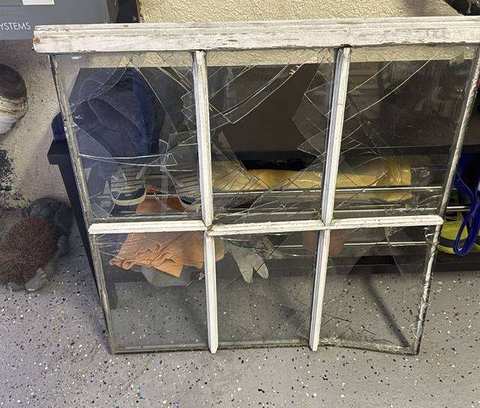 Before
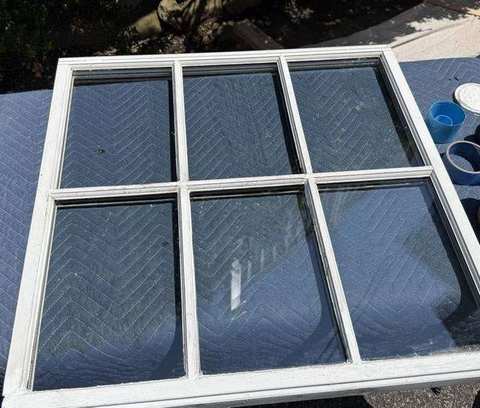 After
AfterThe morning after the nor'easter,
the fence was twenty degrees off plumb.
Every big wind event delivers the same wave of calls from Chatham, Summit, and Glen Ridge: the fence made it through years of weather, then one storm laid a whole run over like a hand of cards. Here's the thing the storm gets blamed for that it didn't actually do — the wind didn't kill those posts. Rot did, months or years earlier, working at the grade line where the post disappears into the soil. The storm just administered the final exam. A fence panel is a sail; every gust loads it and the panel hands that force down to the posts as leverage. A post rotted at its base has already lost the cross-section that resists the twisting, and the first serious wind after the rot crosses center simply snaps it at the dirt like a pencil.
Which is also why a leaning fence is never a stable situation. The lean moves the panel's weight off-center, so gravity now pulls in the same direction the wind pushed. The leaning post drags on its neighbors through the rails, prying their bases. Left alone, a one-post lean becomes a three-post lean by spring — and a rotted fence post problem becomes a "replace the whole line" quote. Caught early, it's a per-post repair with your existing panels rehung exactly where they were.
Find your failures with a five-minute walk
- The push test — grab each post at chest height and rock it firmly. Solid posts barely move; a rotted base lets the post pivot at the dirt like a joystick.
- The probe at grade — sink a screwdriver into the post right where it meets the soil, on the shaded north side first. Sound wood refuses it; a fence post rotted at the base swallows the tip.
- Hollow knock — rap the post low with a knuckle. Rot eats posts from the inside core outward, so a dull, papery sound near the ground means the shell is bluffing.
- Mushrooms and dark collars — fungal fruit at the base, or a black ring at the soil line, means the decay is established and eating.
- Sagging gates — a gate that suddenly drags is often a rotting hinge post rotating under the load, not a hinge problem.
Count what you find, photograph the worst three at ground level, and text them over. You'll get a same-day answer on whether you're looking at post repair, footing correction, or — rarely — a line that's genuinely done.
Why posts fail while panels last
The unfairness of fence anatomy is that its cheapest-to-replace part is the one engineered into the hardest conditions. Panels and rails live in open air, drying after every rain — cedar pickets shrug off decades. Posts live half-buried, and the grade line where soil, moisture, and oxygen all meet is the most rot-friendly environment on your entire property. Older posts set directly in soil, or in concrete collars that cup water against the wood, fail right on schedule at fifteen to twenty-five years even when the fence above looks new. That mismatch is the entire argument for fence post rot repair over fence replacement: the fence isn't worn out — its anchors are. Replace the anchors, keep the fence, and the arithmetic lands at roughly 80% below the re-fencing quote, the same repair-first math we apply to windows, doors, and decks all over Essex and Union counties.
The line gets rebuilt to outlast the original: ground-rated posts, drained and crowned footings, panels rehung plumb, and our 5-year workmanship warranty on the workmanship — from a fully insured crew rated 5.0 on Google. Photo tonight, assessment within 1–2 days, fence standing straight within 1–2 weeks. Call (973) 564-0958 or text the pictures and we'll take it from there.
Fence post repair for Chatham, Summit, Glen Ridge, Montclair & surrounding towns · West Caldwell, NJ · Mon–Fri 8:00 AM – 6:00 PM
Full fence replacement, priced per foot — for a line where three posts failed and thirty didn't. Windows get the same treatment at $23,000+.
Good panels hauled awayOnly the rotted posts replaced, panels rehung true — 80% less than re-fencing, 5-year workmanship warranty on the work.
Straight line, original fenceTest the line. Swap the failures.
Rehang and go.
Photos of the lean
Shoot the leaning section and the post bases at the dirt. Same-day answer: rot, footing, or soil — and a price range.
Same dayPush-test every post
We rock each post and probe at grade, marking the line into sound, sistered, and replace — with a per-post count.
Within 1–2 daysSet, crown, rehang
Failed posts out, new ground-rated posts in properly drained footings, panels rehung plumb and level.
1–2 weeksPrefer to talk first? Call (973) 564-0958 — Mon–Fri, 8 AM–6 PM.
Two fixes for a failed post.
The base decides which.
Full replacement is the right call when rot has crossed the post's core at grade — the majority of storm-snapped posts. We free the panels, pull the stub and footing (or drill the old concrete), and set a new ground-contact-rated post in a hole with gravel drainage below and a crowned concrete top that sheds water away from the wood. The panels you already own go back on the new post, and the line pulls straight again.
Sistering earns its place when the post is sound above grade but failed below — common on thicker gate posts and on lines where digging is constrained by roots, utilities, or a neighbor's hardscape. A steel post mender or a new ground-rated sister is driven or set alongside the original and through-bolted, so the sound upper post keeps doing its job on a new foundation. It's faster and cheaper per post; we'll tell you honestly where it's appropriate and where it's a false economy. Gate frames and rotted rails get the same conservation logic — dutchman splices and element replication where the original woodwork is worth keeping.
Every repaired line leaves plumb, braced, and ready for the next nor'easter.
What the storm made
you wonder — answered.
What does fence post rot repair cost versus replacing the fence?
A new fence is priced by the linear foot — panels, posts, hardware, demolition, hauling — and on a typical suburban lot it climbs into thousands fast, the same replace-everything arithmetic that turns one rotted window into a $23,000+ whole-house project. Post repair is priced by the post. When your panels are sound — and cedar and vinyl panels usually outlive their posts by a decade — swapping the three rotted posts out of thirty costs a small fraction of re-fencing the yard, in line with the roughly 80% savings we see across all our rot work. The count is the only real variable, and it's knowable in advance: we test every post on the line during the free assessment and quote you an exact per-post scope in writing. Photos first: text them to (973) 564-0958 for a same-day read.
My fence is leaning after a storm. Do I need new posts or can it be straightened?
Depends on why it's leaning, and the base of the post holds the answer. If the post snapped or gone spongy at the grade line — the most common storm casualty — straightening is temporary at best; the wood fibers that resisted the wind are gone, and the next gust finishes the job. That post needs replacement or a structural sister. But if the post itself tests sound and the lean came from the earth — concrete footing heaved by frost, or soil saturated into slop by a week of rain — the post can often be plumbed and re-set in a proper footing without replacement. We sort your line into those two categories post by post during the assessment. Either way, don't wire a leaning run to a stake and forget it: a leaning post levers its neighbors, and one bad post becomes five.
Why do fence posts always rot right at the ground?
Because the grade line is where rot fungus gets everything it wants at once. Below ground, the wood is wet but starved of oxygen; well above ground, it's oxygenated but dries quickly after rain. Right at the soil surface — roughly the top few inches of ground down to a few inches below — the post stays damp and aired, which is the fungal sweet spot. Add mulch or soil piled against the post, grass clippings holding moisture, and a concrete collar that traps water against the wood like a cup, and the grade line becomes a slow saw cutting your post in two. It's why a post can be pristine at the rail and hollow at your boot: always test at the dirt, never judge from eye level.
How long does it take to fix rotted fence posts — and does concrete slow it down?
Photos answered same day, assessment within 1–2 days, and the repair completed within 1–2 weeks of approval — the standard RotGone clock. On site, a post swap is quick work per post: detach panels, break out or reuse the footing, set the new post plumb, and re-hang. Concrete is the only pacing item. Fast-setting mixes take initial set in under an hour, so panels usually go back on the same day; when a footing needs full-depth structural concrete, we give it proper cure time before loading the post, which can add a return visit. A multi-post repair across a long line is still typically a one-to-two-day job. We work Mon–Fri 8–6, and we leave no open post holes overnight — ever.
Will the new posts just rot again in ten years?
Not if the replacement fixes the conditions and not just the post — that's the difference between our install and the one that failed. New posts go in rated for ground contact, set so water drains away from the wood instead of pooling against it: gravel at the base of the hole for drainage, concrete crowned and sloped at the top so rain sheds off rather than sitting in a collar around the post, and the cut end never buried raw. We also clear the grade-line enemies — mulch mounded on the post, soil creep, sprinklers rinsing the base daily — and tell you which ones to keep clear. The workmanship carries our 5-year workmanship warranty, from a fully insured crew. Rot needs standing moisture at the wood; deny it that, and a properly set post serves for decades.
The rest of the rot repair trade.
Send us a photo — get a real answer today
Tell us what's going on and attach a picture of the damage. We'll tell you honestly whether it's rot, whether it can be repaired, and roughly what it costs.
Three bad posts shouldn't cost you
the whole fence.
Walk the line, shoot the leaning posts at the dirt, and text us the photos. You'll know tonight what it takes to stand it back up.