Wood Rot Repair Services in New Jersey
Soft sills, peeling paint, a contractor pushing full replacement? Wherever exterior wood meets NJ weather, rot follows. We consolidate, splice, and rebuild the original wood — for about 80% less than replacement.
replacement
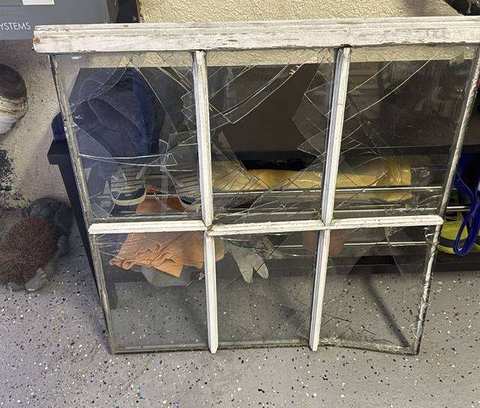 Before
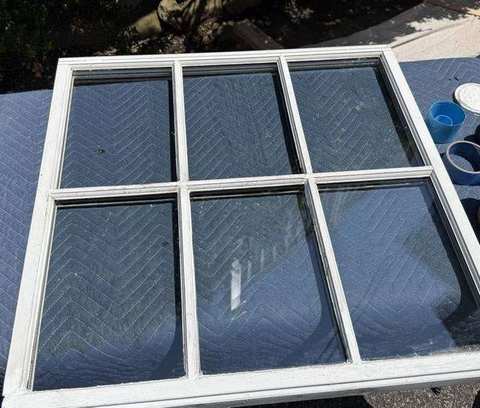 After
AfterNobody told you it could be repaired.
Most homeowners hear one option — replacement — because that's what the company at the door sells. Here's the comparison nobody hands you.
Repair with RotGone
- Original wood stays — including profiles nobody manufactures anymore
- 1–2 weeks, not months of lead time
- Same sightlines, same glass line, same house
- 5-year workmanship warranty
Full replacement
- "5–8 windows for $23,000" works out to $2,900–4,600 each
- Vinyl swaps old-growth wood for plastic that can't be repaired later
- 4–8 weeks including manufacturing lead time
- Trim, sills and interior casing get rebuilt around the new unit
Prices depend on how far the decay actually goes — that's what the free assessment is for. And we'll tell you honestly when replacement really is the right call; it happens, and you'd rather hear it from us than find out afterwards.
Rot doesn't announce itself.
It hides.
Nobody calls us and says "I have wood rot." They say the paint on the window trim keeps peeling no matter how often they repaint. They say the sill feels spongy when they lean on it. They say there's a dark stain under the door that never dries, or a deck post that's started to wobble, or — most often — that a contractor looked at one soft corner and quoted a full replacement of everything.
All of those are the same problem wearing different disguises. Wood rot is fungal decay that starts wherever exterior wood stays wet: the joint where a sill meets the frame, the base of a porch column, the first six inches of a fence post, the threshold under a French door. In New Jersey's climate — wet springs, humid summers, freeze–thaw winters — every home with exterior wood is a candidate, and the older homes in Essex, Morris, and Union counties are the most exposed and the most worth saving.
What we repair
- Windows — rotted frames, sills, sashes, brickmould, and exterior trim, including historic and landmark-district windows
- Doors — rotten door frames, jambs, sills, and thresholds on entry, patio, and French doors
- Sunrooms — rotted framing, sills, and trim where glass walls meet wood structure
- Decks & porches — soft boards, decayed joists, post bases, columns, railings, and exterior stairs
- Fences — rotted fence posts at grade, rails, and gate frames
One crew, one craft, one warranty — across all of it. Because the fungus doesn't care what it's eating, and neither should your repair contractor.
Why repair-first — and why almost nobody else offers it
The economics of the window and door industry are simple: companies earn on selling new units, so "replace it all" is the answer you'll hear almost everywhere — even when 90% of the wood is perfectly sound. We built RotGone on the opposite premise. Old-growth wood in pre-war homes is denser, straighter, and more rot-resistant than most lumber money can buy today. Throwing away an entire window because one corner of the sill decayed is like replacing a car because of a flat tire.
Our repair-first approach means we cut out only what the fungus has actually destroyed, rebuild it with epoxy consolidation or a spliced-in dutchman of matching wood, and seal the water path that caused the problem — typically for about 80% less than the replacement quote sitting on your kitchen counter. When replacement genuinely is the better answer, we say so, in writing, with both prices side by side. That honesty is why homeowners in Montclair, Millburn, and Glen Ridge keep referring us to their neighbors — and why our Google rating in West Caldwell stands at 5.0.
Fully insured · 5-year workmanship warranty · Serving Essex, Morris, Union & Bergen counties from West Caldwell, NJ · Mon–Fri 8:00 AM – 6:00 PM
Average full wood-window replacement project — and studies put its resale return at a net loss. Entry door replacement: $10,000+.
−32% ROI on resaleEpoxy consolidation and dutchman splicing rebuild only what's damaged — 80% less than replacement, backed by a 5-year workmanship warranty.
Original craftsmanship preservedFrom photo to fixed — in days, not months.
Text us a photo
Snap the damaged spot. We'll tell you if it's rot, what can be saved, and a realistic price range.
Same dayOnsite assessment
We probe the wood, map how far the rot goes, and give you a written repair-vs-replace comparison.
Within 1–2 daysRepair & warranty
We source materials and complete the repair. You keep the original wood — with a 5-year workmanship warranty.
1–2 weeksPrefer to talk first? Call (973) 564-0958 — Mon–Fri, 8 AM–6 PM.
Two conservation-grade methods.
One standard: save the wood.
Epoxy consolidation
When rot has softened the wood but the element is still in place, we cut out the decayed fibers, dry the substrate, and saturate the remaining wood with a penetrating epoxy consolidant. It wicks deep into the grain and cures into a matrix that's harder and more water-resistant than the original material. We then rebuild the missing profile with structural epoxy filler, shape it to match the existing lines, and finish with primer and paint. The result is invisible from two feet away — and it won't rot again, because cured epoxy gives the fungus nothing to eat.
Dutchman repair & wood splicing
When a section is too far gone to consolidate, we do what restoration carpenters have done for centuries: cut the damage back to sound wood and fit a new piece — a "dutchman" — of matching species and grain orientation, glued and mechanically joined so it moves with the original element through NJ's seasons. For sills, rails, and post bases we splice in new sections the same way. It's the method used on landmark buildings, which is exactly why it's the right approach for the pre-war homes we work on in Montclair, Glen Ridge, and Maplewood.
The same conservation-grade methods used on landmark buildings — applied to your home.
Wood rot, answered honestly.
What exactly is wood rot — and why does my house have it?
Wood rot is fungal decay. Rot fungi are everywhere in the air; all they need to start eating your trim is wood that stays damp long enough — usually above roughly 20% moisture content. That's why rot always shows up where water sits: the bottom corners of window frames, exterior sills, door thresholds, deck posts, and fence posts at grade.
New Jersey makes it worse. Freeze–thaw winters open joints and crack paint films, humid summers keep the wood from drying, and older homes in towns like Montclair, Glen Ridge, and Millburn have decades of paint layers hiding the early stages. By the time you can push a screwdriver into the wood, the fungus has usually been working for a few seasons. The good news: rot is almost always local. It starts where water collects and spreads slowly, which is exactly why targeted repair works so well — you remove and rebuild the damaged section instead of discarding an entire window, door, or deck.
Repair or replace — how do I know which one my situation needs?
Our rule of thumb from years of assessments: if the rot is confined to specific elements — a sill, the lower rail of a sash, a section of frame, a deck post — repair is almost always the smarter call. The surrounding old-growth wood is usually denser and more stable than anything sold today, and it's worth keeping. If the structure has lost integrity across most of the unit, or the same element has been patched repeatedly and keeps failing because of a design flaw, we'll tell you replacement makes more sense.
That's not a judgment call we ask you to take on faith. Our written estimate shows both numbers — the repair price and a realistic replacement figure — side by side, so you decide with the math in front of you. About the only thing we won't do is recommend replacement just because it's the easier sale. Repair is our business; replacement is our last resort.
How much does wood rot repair cost in New Jersey?
Every job is priced from the actual scope, but the pattern is consistent: professionally repairing a rotted element typically runs about 80% less than replacing the whole unit it belongs to. A rotted window sill or frame corner is a repair measured in hundreds of dollars; the replacement window it would otherwise force on you is measured in thousands — and a full wood-window replacement project in our area routinely exceeds $23,000, with resale studies showing a net loss on that spend.
The honest variables are how far the rot has traveled, how accessible the element is, and whether we're consolidating with epoxy or splicing in new wood. That's why we start with a photo: text us a picture of the damage and we'll give you a straight answer the same day — whether it's rot, whether it's worth repairing, and a realistic price range before anyone comes to your home. The onsite assessment and written estimate are free.
How long does a wood rot repair take?
Faster than you'd expect — and far faster than a replacement project. The sequence looks like this: text us a photo and you'll have an answer the same day. If it looks repairable, we schedule an onsite assessment within 1–2 days, probe the wood to map how far the decay actually goes, and hand you a written repair-vs-replace comparison. Once you approve the estimate, most repairs are completed within 1–2 weeks, including sourcing matching wood and materials.
The work itself is usually one to two days on site per area: cutting out decayed material, drying and treating the substrate, consolidating or splicing, then filling, sanding, priming, and painting. Compare that with a replacement order — weeks of lead time for manufactured units, a demo crew, disposal, and interior touch-ups afterward. We work Mon–Fri, 8 AM to 6 PM, and we leave the site clean every evening.
Is the repair permanent? What warranty do I get?
Done correctly, a rot repair is not a patch — it's a rebuild of the damaged section. Epoxy-consolidated wood is harder and more moisture-resistant than the original material, and a properly fitted dutchman splice becomes a structural part of the element. The conservation world has used these same methods on landmark buildings for decades precisely because they last.
We stand behind that with a 5-year workmanship warranty on every repair — if our workmanship fails within five years, we come back and make it right. Just as important, we fix the cause, not only the symptom: sealing the joints and paths where water was getting in, because rot that stays dry stays dead. RotGone is fully insured, with general liability and workers' compensation coverage, so the crew working on your home is covered from the first day. And because you keep the original wood, you also keep the character that made your home worth maintaining in the first place.
Wood rot repair, by where it lives.
Send us a photo — get a real answer today
Tell us what's going on and attach a picture of the damage. We'll tell you honestly whether it's rot, whether it can be repaired, and roughly what it costs.
Before you sign that
replacement quote — call us.
Send a photo or book a free assessment. We'll tell you honestly what can be saved, what can't, and exactly what both options cost.