Patio Door Glass Replacement
The biggest pane in your house fails like any other — fog between the panes, a crack from a mower stone, a shattered panel. We replace the tempered glass unit in your existing door. The door never leaves the wall.
replacement
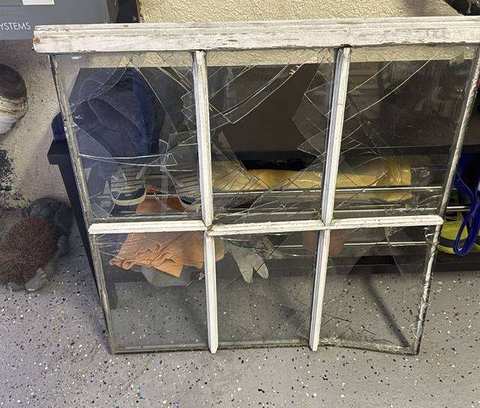 Before
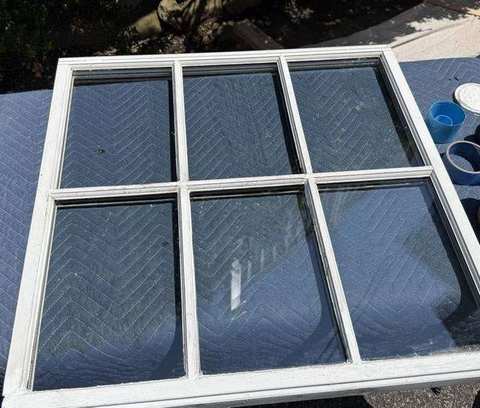 After
AfterThe largest glass you own,
and the simplest fix it can need.
A patio door is where most homes concentrate their glass — a single sliding panel in a Livingston family room can hold more square footage than every window in the kitchen combined. So when that glass fails, the failure feels proportionally large: the fog spreads across your whole garden view, or the crack runs a meter, or the entire panel lets go at once into a pile of glittering cubes. The instinct that follows — we need a new door — is understandable and almost always wrong. The glass in a patio door is a component: a sealed, tempered, made-to-size cartridge seated in the panel by stops and gaskets. It failed as a component and it replaces as one. Everything a new door would give you — the frame, the rollers, the track, the lock — you already own, in working order, attached to your house.
Why patio door units fail first
It isn't bad luck that the biggest unit in the house is often the first to fog. Large IGUs live a harder life than window units: more glass area means more thermal flexing across every sunny-cold morning, more wind load working the edge seal, and — unique to sliders — a lifetime of rolling vibration and door-slams transmitted straight into the glazing. South- and west-facing doors, the ones that make a room worth sitting in, take the biggest daily temperature swings and fail soonest. The seal at the perimeter is the fuse in this system, engineered decades ago to a price point; when it finally cracks, the fog announces it. None of that involves the door. Replace the fuse, keep the appliance.
The honest scope, and nothing past it
- Fogged unit, sound door — glass-only replacement. The overwhelming majority of calls, from Chatham to Summit.
- Broken or shattered unit — same repair plus a secured opening while the tempered unit is fabricated.
- Fogged unit and a dragging panel — glass replacement plus roller and track service in the same visit; still a fraction of a door project.
- Rot at the door's frame or sill — the one finding that changes the conversation; wood repair is our founding trade, priced separately and honestly at rotten door frame repair.
- A door genuinely past saving — racked frame, failed panel joinery — and we'll say so plainly, with the replacement number in writing next to the repair that no longer makes sense.
That last honesty is the company habit: we quote the fix the door needs, not the project the showroom prefers. Most patio doors need one made-to-size tempered unit and an hour of careful glazing — about 80% less than the alternative, warranted for five years, by a fully insured crew that answers photos the same day.
Patio & sliding door glass replacement across Chatham, Summit, Livingston & northern NJ · West Caldwell, NJ · Mon–Fri 8:00 AM – 6:00 PM · (973) 564-0958
A four-figure-plus project — tear-out, new frame, trim, finishing — prescribed for a door whose only failure is a sealed glass cartridge.
Days of work for a one-part problemA made-to-size tempered unit set into your existing panel — 80% less than the door project, backed by our 5-year workmanship warranty.
Clear glass by next weekBig panes, small
disruption.
Photo & measure
Send photos of the door and the failed panel — answered the same day. Onsite, we measure the unit to the millimeter and confirm the glass spec: tempered, low-E, argon, grids.
Within 1–2 daysFabrication
Your unit is manufactured to size — tempered units can't be cut from stock, so precision at the measure is what makes the set flawless. We keep the opening advised and secure meanwhile.
Made to orderRe-glaze & tune
Old unit out, stops and gaskets serviced, new unit bedded and sealed, and the panel checked on its rollers and track before we leave. One visit for the swap in most cases.
Within 1–2 weeksPrefer to talk first? Call (973) 564-0958 — Mon–Fri, 8 AM–6 PM.
Every patio door type,
every failure mode.
The glass fix is the same craft across door styles — what changes is the handling, and knowing the differences is what keeps big panes safe on the way in and out.
Sliding doors carry the largest units — a single panel can hold more glass than four windows — and they add a mechanical wrinkle: the panel must come off its track for a clean re-glaze, and it goes back on with rollers checked and adjusted, because a heavy new unit on worn rollers turns a glass job into a dragging-door complaint. French doors hold smaller tempered units, often several per door with true or simulated divided lites; matching the low-E tint across neighboring lites is the detail that separates a seamless job from a checkerboard. Fixed panels and transoms around patio doors fail like any IGU — fog first — and are re-glazed in place. Failure modes drive urgency: fog is cosmetic-plus-efficiency and can be scheduled at leisure; cracks in tempered glass are rare but mean the pane's strength is compromised and it should be handled gently until replaced; shattering is the tempered end-state — dramatic, safe by design, and a covered-opening situation until the new unit arrives.
While the panel is open we service what surrounds the glass: setting blocks reset so the unit's weight sits where the panel is built to carry it, gaskets and glazing stops renewed rather than reused when they've hardened, weep paths cleared so the frame drains. If the door itself is fighting you — rollers, track, latch, or a rotted frame base — that's the neighboring trade on our door repair page, and both jobs happily share one visit.
Safety glazing in doors is non-negotiable — every unit we set is tempered and documented as such.
The big-pane questions,
answered to size.
My sliding door glass is foggy between the panes. Do I need a new door?
No — you need a new glass unit, and the door keeps its job. That fog is a failed insulated glass unit: the perimeter seal between the two panes has cracked after years of thermal flexing, humid air has reached the cavity, and the desiccant that kept it dry is saturated. From then on, every temperature swing paints condensation across the inner surfaces where no cloth can reach. Crucially, the IGU is a self-contained cartridge held in the door panel by stops or gaskets — it was installed as a unit and it comes out as one. We measure it precisely, order a new sealed unit made to those dimensions with the correct tempered safety glass, and re-glaze your existing panel. Frame, rollers, track, handle, lock, and screen are untouched. The "you need a new slider" answer exists because doors are sold by door companies; the glass-only fix is the standard practice of glass people, and it's one of our most frequent calls in Chatham and Summit.
Why does patio door glass have to be tempered?
Because building safety codes require safety glazing in doors — and for good reason. A patio door is a human-sized sheet of glass at floor level in the busiest traffic path of the house; people walk into them, kids run at them, furniture gets carried through them. Annealed (ordinary) glass breaks into long, knife-edged shards in exactly that scenario. Tempered glass is heat-treated so it's several times stronger, and when it does break, it crumbles into small granular pieces rather than daggers — the same principle as a car's side windows. Every unit we put into a patio or French door is tempered to meet safety-glazing requirements, full stop. This is also a quiet reason to be wary of the cheapest possible quote on a door-glass job: an undersized annealed pane from a general glass shop may fit the opening, but it doesn't belong in a door. Ours are ordered tempered, sized to the panel, and documented that way on your written estimate.
Can you match the look and performance of the original glass?
Yes — matching the specification is part of the measure. A replacement IGU is built to order, which means every attribute of the original can be reproduced: overall thickness so it seats in the existing stops, low-E coating so the new panel doesn't read a different color than its neighbor, argon fill for the insulating value, grids between the glass where the original had them, and obscure or tinted glass where privacy calls for it. This matters most on multi-panel doors — a slider with a fixed panel, or French doors side by side — where one new clear unit next to an original low-E unit would be visibly mismatched in reflection and tint. It's also an upgrade opportunity while the panel is open: stepping up to laminated-over-tempered construction adds sound damping and security (the panel holds together even when broken), which some homeowners near busier roads choose while the door is already being reglazed — the acoustic side of that story is on our window soundproofing page.
The glass shattered — the door is just a frame full of pebbles. Now what?
First, the reassuring part: tempered glass did its job. Those thousands of small cubes instead of blades are the design working. Practical steps: clear the track area so the granules don't grind into the rollers, wear shoes around the area for a few days (cubes travel), and get the opening covered — plywood, rigid foam board, even heavy cardboard taped over the frame keeps weather and worry out short-term. Then send us photos of the door and the empty panel: answered the same day, measured within 1–2 days. Tempered units are made to order — the tempering process means they can't be cut down from stock — so there is a fabrication interval, with the full job completing within 1–2 weeks. We'll advise on securing the opening properly in the meantime. One honest note: a shattered panel with no obvious impact usually traces to edge damage or stress from a racked door panel, so we check the panel's alignment and rollers while we're there — replacing glass into a door that's twisting is how the same call happens twice.
What does patio door glass replacement cost compared with a new door?
A quality replacement sliding or French door is a four-figure project before installation, and well past it after — the panel, the frame, the tear-out, the finishing, and often new interior and exterior trim to close the wounds. A glass-unit replacement is priced on the unit itself — size and specification (tempered, low-E, argon, grids, laminated) plus the re-glazing labor — and lands at a fraction of the door quote, in line with the roughly 80% savings that runs through all our repair-first work. The rest of the door's problems, if it has any, are separately small: rollers, tracks, handles, and locks are serviceable parts (see door repair), which means even a slider that's fogged and dragging usually adds up to two modest repairs, not one large replacement. Written estimate free; the door-replacement number is included beside it so the comparison is yours to make, not ours to spin. Workmanship carries our 5-year workmanship warranty, and the crew is fully insured.
Neighboring fixes for
the same doorway.
Send us a photo — get a real answer today
Tell us what's going on and attach a picture of the damage. We'll tell you honestly whether it's rot, whether it can be repaired, and roughly what it costs.
Keep the door.
Change the view back to clear.
Photo the fogged or broken panel and we'll price the exact tempered unit the same day — with the new-door number beside it for honest contrast.