Rotten Window Sash Repair
Press a thumbnail into the bottom rail of your oldest window. If it sinks, the sash is feeding a fungus — and the window industry will quote you a whole new unit for it. We rebuild the rail instead: epoxy, splice, or replication, at about 80% less.
replacement
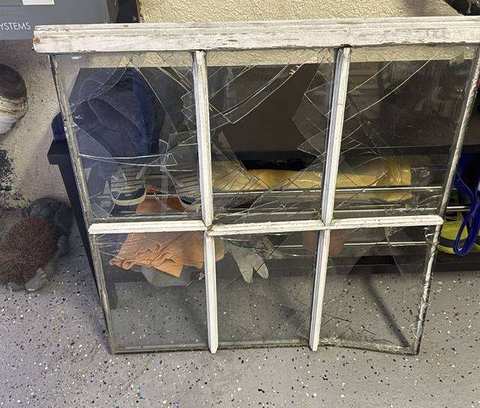 Before
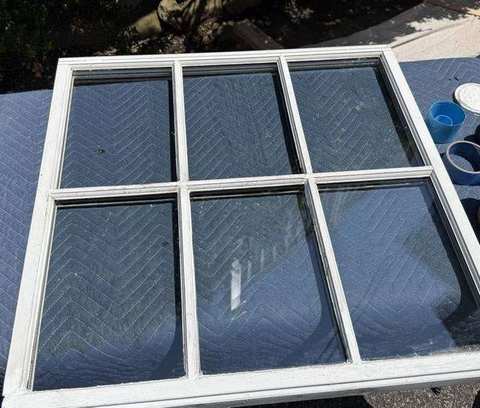 After
AfterAnatomy of a rotting sash:
three places, one story.
The sash — the wooden frame actually holding your glass — rots in a pattern so predictable we could draw it blind. Water obeys gravity and finds joints; the sash offers it three: the bottom rail, catching everything that runs off the glass; the meeting rail, where the two sashes of a double-hung overlap and condensation lingers in the shadowed gap; and the glazing joints, where aging putty cracks away from the glass and turns a weather seal into a funnel. Decay starts in one of those three places in nearly every rotted sash we've ever opened. Which means a "rotted window" is rarely rotted at all — it's a sound frame and good glass surrounding a few compromised inches of rail. You repair the inches. You keep the window.
The three-front diagnosis
On the bottom rail, look along the paint for bubbling, a dark line at the glazing edge, or corners that feel dull when tapped — sound wood knocks, punk wood thuds. The meeting rail hides its trouble on the faces you can't see without raising the lower sash; peeling paint on the check rail and a spongy feel at the lock mortise are the tells, and because the lock anchors there, rot here costs you security as well as structure. At the glazing line, cracked or missing putty is the alarm itself — even before the wood softens, an open putty line means water is already inside the joint. Any of the three warrants a photo; all three at once warrants one this week. We read sash photos every day and answer the same day.
Same conservation craft, sash-scale precision
The methods that save sills and door jambs work on sashes — the difference is scale and finesse, since a sash rail may be barely two inches of wood doing three jobs at once. Where fiber survives, we use epoxy consolidation: decayed material out, substrate dried, thin penetrating resin hardening the remaining grain, structural paste rebuilding the profile sharp enough to hold a putty line. Where a section is truly gone, a dutchman splice puts matched wood back into the rail or stile end, grain agreeing with grain, joined to carry the racking loads a moving sash endures. Corners get re-glued and squared while we're in there — a rot-weakened joint is usually a loose one too. And because the sash comes out of its frame so willingly, much of this happens on padded horses or in our shop, with a weathertight panel minding the opening.
The last rung: replication, not replacement
Some sashes are past arguing over — rot through the rail, up both stile ends, into the muntin bases. For those we build the sash again: same species, same profiles, same dimensions, rabbeted to receive the original glass wherever it survived. Note what that preserves — the frame, the weights, the wavy glass, the streetscape — and what it avoids: a $23,000+ whole-house replacement conversation triggered by the worst window in the house. It's how the pre-war homes of Glen Ridge, Montclair, and Maplewood keep their faces. Whatever rung your sash needs, the terms are the same: about 80% less than replacement, a 5-year workmanship warranty on the work, a fully insured crew, assessment within 1–2 days, and completion within 1–2 weeks. One caution born of experience: sash rot compounds quietly, and this fall's consolidation job is next fall's replication job. The photo costs nothing — send it now.
Rotten sash repair for Glen Ridge, Montclair, Maplewood, Millburn, West Caldwell & northern NJ · Mon–Fri 8:00 AM – 6:00 PM · (973) 564-0958
A whole-house replacement project — proposed to homeowners whose actual problem is a few soft bottom rails on otherwise sound windows.
Good glass and frames, landfilledConsolidation, splicing, or full sash replication — only as deep as the rot demands, 80% less than replacement, with our 5-year workmanship warranty.
Original window, sound againOnly as deep
as the rot demands.
Map the decay
Photo triage, then onsite probing of rails, stiles, joints, and glazing lines — sash by sash, so hidden rot doesn't surprise anyone later.
Photo: same day · Onsite: 1–2 daysChoose the rung
Consolidate what's softened. Splice what's lost. Replicate the sash only when rebuilding it in fragments stops making sense. The estimate names the method per window.
Decided at assessmentRebuild & seal the doorway
Wood rebuilt, joints squared, glass re-bedded in fresh putty, paint sealing the water path that started it all. Openings stay weathertight throughout.
1–2 weeksPrefer to talk first? Call (973) 564-0958 — Mon–Fri, 8 AM–6 PM.
The bottom rail questions,
answered from experience.
Why does the bottom rail of the sash always rot first?
Because gravity makes it the sash's gutter. Every drop of rain that hits the glass runs down and lands on the bottom rail; every night of condensation inside the house trickles to the same place. The rail's top edge meets the glass at the glazing line — a joint that opens as putty ages — and its ends meet the stiles in joints that expose end grain, which drinks water many times faster than face grain. So the bottom rail spends its life wetter than any other part of the sash, dries slowest, and sits horizontal so water pools instead of shedding. Add a few seasons of cracked paint and the rot fungus has everything it needs. The pattern is so consistent that we can often diagnose a sash from one photo of its lower corners. The good news is symmetrical: because rot concentrates there, repair concentrates there too — one rail, not one window.
Can a rotted sash really be repaired in place, or does it have to come out?
Both happen, and the decay's depth decides. Shallow rot — a softened lower edge, a punky corner an inch or two deep — is repaired with the sash in its frame: decayed fiber excavated, the zone dried, penetrating epoxy consolidant hardening what remains, structural paste rebuilding the profile, then primer and paint. You keep using the window the whole time. Deeper damage — a bottom rail gone through, joints crumbled at the stile ends — argues for pulling the sash, which in a double-hung takes minutes: stops pry off, cords unhook, and the sash comes to padded horses or into our shop where joinery work is precise. There we can cut back to sound wood, splice in a new rail section or a full dutchman, re-glue the corner joints square, and reassemble properly. The opening is never left open — a weathertight panel covers it if the sash travels — and either route carries the same 5-year workmanship warranty.
The wood around my glass is crumbling and the putty is falling out. Is that sash rot?
It's the beginning of it — you're looking at the glazing joint, which is sash rot's favorite doorway. The putty bedding the glass into its rabbet is a wearing part: it dries, cracks, and lifts after years of sun, and once it does, rain runs straight off the glass into the bare wood channel beneath. That channel is thin — often half an inch of wood between glass and weather — so decay takes hold quickly and spreads down into the rail. Caught early, the fix is straightforward: rake out the failed putty, treat and consolidate any softened wood in the rabbet, re-bed the glass, and lay a new putty line — full detail on our window reglazing page. Caught late, the rabbet wall crumbles and we're rebuilding the rail with epoxy or a splice before reglazing. The difference between those two invoices is a year or two of neglect, which is why we tell everyone: cracked putty is a now problem.
When is a sash too far gone — and what does sash replication involve?
A sash earns replication rather than repair when the arithmetic of splicing collapses — when rot has taken not just the bottom rail but the stile ends and muntin bases too, so rebuilding means remaking most of the sash anyway, in fragments. At that point the honest move is to build the sash new: same species, same dimensions, same sticking and muntin profiles, made to receive the original glass wherever it survived. That last detail matters — replication replaces the wood, not the wavy glass or the sightlines, so the window still reads original from the street and the sidewalk. This is standard practice on the pre-war housing stock of Glen Ridge and Montclair, and it is emphatically not the same as buying a replacement window: the frame stays, the weights and cords stay, the glass stays, and one made-to-match sash slots into the system your house already has. It's the deepest cut in our repair ladder — and still far cheaper than replacing the unit.
What does rotted sash repair cost compared with a replacement window?
A rotted sash is a component problem priced like one. Consolidating and rebuilding a bottom rail, splicing a dutchman into a stile, or reglazing a decayed joint are repairs measured in the hundreds — typically about 80% less than swapping the window whose glass and frame were never the problem. Even full sash replication, our most involved answer, is a fraction of a good replacement unit installed; whole-house replacement projects in our area start around $23,000, which is a striking price for houses whose actual affliction is soft bottom rails. Our estimate shows the repair number beside a realistic replacement number for the same opening, per window, in writing. The process starts free: text photos of your worst sash corners to (973) 564-0958, get an answer the same day, an onsite assessment within 1–2 days, and completed work — including shop time — within 1–2 weeks of approval.
Rot travels. So do we.
Send us a photo — get a real answer today
Tell us what's going on and attach a picture of the damage. We'll tell you honestly whether it's rot, whether it can be repaired, and roughly what it costs.
Soft rail today,
replacement quote tomorrow.
Send photos of the sash corners before the season turns. If it's rot, we'll tell you how deep, which method fixes it, and the exact price.