Custom Window Replication
Some windows can't be bought anymore — the maker is gone, or there never was one. We build them again: measured from your originals, milled to the same profiles, joined the same way. New wood, old window.
the original
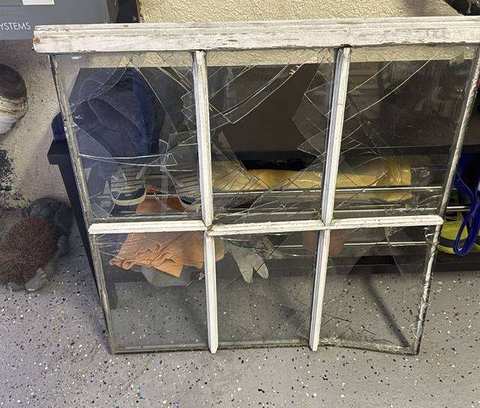 Original
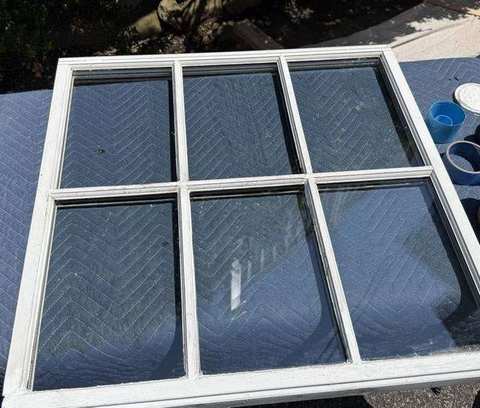 Replica
For windows you can't buy,
because nobody makes them.
Every window trade has a moment where the catalog runs out. A 1912 foursquare in Montclair loses one sash to a fallen limb — and the sash was milled by a shop that closed before the Depression. A colonial in Summit has eleven perfect windows from a line the manufacturer discontinued in the nineties, and the twelfth is rotted past saving. A Glen Ridge homeowner needs one casement to complete a restoration, and nothing in production comes within an inch of the original's stile width. The replacement industry has one answer for all three: change all the windows so the new ones match each other. It's an answer that solves the supplier's problem — catalogs only sell what exists — by making the homeowner pay to discard everything that doesn't match the catalog.
Replication is the other answer. If a window existed once, it can exist again: wood is still wood, profiles can be measured, knives can be ground to cut them, and joinery that was done by hand in 1912 can be done by hand now. This is the shop side of our restoration practice — the same profile knowledge and joinery we use to restore historic windows and splice rotted sashes, carried one step further: instead of rebuilding part of a window, we build all of it. It is the rarest service we offer and the one that makes the rest of our repair-first philosophy complete. "Repair, don't replace" only works as a promise if, when replacement truly is necessary, the replacement can honor what was there.
Where replication is the right call — and where it isn't
We reach for replication in three situations. The original is gone or destroyed: fire, storm, a previous renovation that discarded sashes, an opening someone filled with glass block in 1974. The original is past the restoration line: our standing rule is that when more than half the structural wood is decayed, rebuilding costs more than building — at that point honest craft means a replica, not a heroic patch. The line is discontinued: one failed unit among matching survivors, where the alternative is replacing a whole elevation for the sake of uniformity. And one situation where we'll talk you out of it: a tired but structurally sound original. Restoration keeps real historic fabric and costs meaningfully less — about 80% less than replacement-grade work — and no replica, however faithful, beats the thing itself. We assess before we quote, and the assessment sorts your window into the right column with both prices in writing.
How a window gets built twice
The process is equal parts surveying and joinery. It begins with templating: we document the original — or its intact twin — at full scale, taking profile sections of every member: stiles, rails, muntins, parting beads, stops. Old profiles are subtler than they look; an ovolo from one decade differs from the next by a curve you'd never name but would absolutely notice. Then stock and knives: wood is selected for stability and rot resistance, and cutter knives are ground to the documented sections so the milled members carry the original's exact shadow lines. Then joinery: members are joined as the original was — true mortise-and-tenon for pre-war work — because construction is part of the match; a replica that's glued and stapled where the original was pegged will neither move nor age like its siblings. Then glazing: true divided lites bedded in putty where the original had them, restoration glass where the setting deserves it, modern glass where it doesn't show and the budget prefers it. Finally finishing and fitting: primed, painted, hung, eased, and tuned in the opening until it operates the way the house's other windows do.
Four things a replica
must get exactly right.
Profiles & moldings
The ovolo on a muntin, the shape of a sash horn, the bevel of a bottom rail — we mill knives to the original section, so the shadow lines match at arm's length and at curb distance.
Joinery
Mortise-and-tenon where the original used mortise-and-tenon. Replicas built with the original's construction move, wear, and last like the original — and can be serviced the same way.
Sightlines & proportions
Stile widths, rail heights, muntin patterns, and glass-to-wood ratios reproduced to the sixteenth. This is what makes a replica disappear into a facade instead of announcing itself.
Glass character
True divided lites, putty-glazed the traditional way — and where the setting calls for it, restoration glass with the subtle waver that flat float glass can't fake.
Not sure whether your window needs restoration or replication? Send photos — we'll sort it honestly, with both prices.
A note for historic-district homeowners
If your house sits in one of northern New Jersey's historic districts, replication isn't just an aesthetic choice — it's frequently the difference between an approved application and a contested one. Preservation commissions exist to protect exactly the details replication preserves: sightlines, profiles, divided-lite patterns, the rhythm of a streetscape. We've prepared profile documentation for projects in and around Montclair, Glen Ridge, and Summit, and the pattern is consistent — a submission that shows the replacement matching the original section-for-section gets a very different reception than a catalog cut-sheet. Your district's rules are its own; check them first, and bring us in early enough to document before anything is removed. The paired page for district work is historic window restoration — most district projects use both crafts, restoring what survives and replicating what doesn't.
Building what's gone,
answered.
What exactly is window replication, and how is it different from buying a custom window?
A catalog "custom" window is a manufacturer's standard product cut to your dimensions — their profiles, their joinery, their sightlines, sized to your hole. Replication starts from the opposite end: your existing window is the specification. We measure and template the original — every profile section, every joint, every proportion — and then build a new window to that drawing, in wood, using construction the original maker would recognize. The distinction shows from the sidewalk. A dimensionally custom unit still looks like a modern product in an old opening: fatter stiles, flatter profiles, snap-in grilles pretending to be muntins. A replicated sash reads as original because, dimensionally and structurally, it is — new wood, old design. That's why replication is the standard we're asked for in historic districts, and why it pairs naturally with our historic window restoration work, where one replicated window often sits among eleven restored ones and nobody can tell you which is which.
My window's manufacturer is out of business. Can you still match it?
That's precisely the job this page exists for. Discontinued lines are one of the two situations that bring people to replication — the other being pre-war windows that never had a manufacturer in the modern sense. When a maker shuts down or retires a line, its owners are stranded: one storm-cracked sash in a house full of matching windows, and the industry's answer is "replace them all so they match." Replication answers differently: we take the surviving sash — or its intact twin from another opening — template its sections and joinery, mill matching stock, and build the one window you actually need. The same applies to failed casements from defunct brands, orphaned transoms, and the odd-sized specials that manufacturers never made twice. You keep eleven good windows and buy one, instead of discarding eleven good windows to buy twelve. The arithmetic isn't subtle, which is why the "replace them all" suggestion rarely survives a written replication quote sitting next to it.
Will a replicated window satisfy my town's historic preservation commission?
Replication is generally the approvable path when an original is truly past saving — with the decision always resting with your local commission. HPC guidelines across New Jersey's historic districts — Montclair, Glen Ridge, Summit, and their neighbors each run their own review — consistently prioritize two things: retain original fabric where possible, and match it faithfully where it must be replaced. Restoration serves the first principle; replication serves the second. What commissions push back on is what replication specifically avoids: vinyl or clad units with altered sightlines, snap-in grilles, and lost profiles. Our role in the process is documentation — we provide profile drawings and specifications comparing the replica to the original, section by section, which gives the commission something concrete to approve and gives your application a craftsman's evidence rather than a catalog page. Where only part of a window is gone, we'll propose replicating the component — a bottom rail, a single sash — inside a restoration scope, which is usually the easiest approval of all. Check your district's requirements before exterior work; we're glad to prepare the window portion of the submission.
What does a replicated window cost?
More than a stock insert, less than people fear, and — this is the comparison that matters — dramatically less than the path it replaces, which is discarding a house's worth of matching windows to solve one opening. Replication is priced per window from the actual scope: single sash versus complete window with frame, muntin count, glass specification, and finish. A single replicated sash sits far below a full custom window; a complete true-divided-lite window with restoration glass is a premium piece and priced accordingly, though still a fraction of the $23,000+ whole-house project that "make them all match" implies. Two honesty rules govern every quote. First, if your window can be restored instead of replicated, we say so — restoration runs about 80% less than replacement-grade work, and saving original fabric beats copying it. Second, every estimate is written, itemized, and free, with the alternative path priced beside it so you're choosing between real numbers. Assessment within 1–2 days; photo questions answered the same day.
How long does replication take, and what happens to my opening meanwhile?
Replication runs on a shop timeline, not an emergency one — templating, milling, joinery, glazing, and finishing are sequential crafts, and we quote the schedule honestly at assessment rather than promising a miracle and delivering an apology. What we control tightly is your house's condition during the wait: the existing opening stays weathertight throughout, whether that means the damaged original remains serviceable in place, or we secure the opening properly while the replica is built. Fitting day is deliberately unhurried — a replicated window is hung, eased, and tuned like the original it copies, with hardware aligned and weatherstripping fitted, not foamed into a gap and trimmed over. The work is done by a fully insured crew and carries our 5-year workmanship warranty on workmanship. One scheduling note from experience across Montclair and Summit: commissions meet monthly, so if HPC approval is part of your path, start the conversation a season before you need the window. Text photos of the original to (973) 564-0958 and we'll tell you the same day whether replication, restoration, or repair is the honest recommendation.
Restore first. Replicate
when you must.
The window they stopped making?
We didn't.
Text photos of the original — or of the opening where it used to be. You'll get an honest read on restore vs. replicate, with both numbers in writing.