Exterior Door Repair
Entry, back, French, and storm doors take New Jersey weather head-on — and fail from the bottom up. We repair the whole system: threshold, seals, frame, hardware, slab. The draft stops; the door stays.
replacement
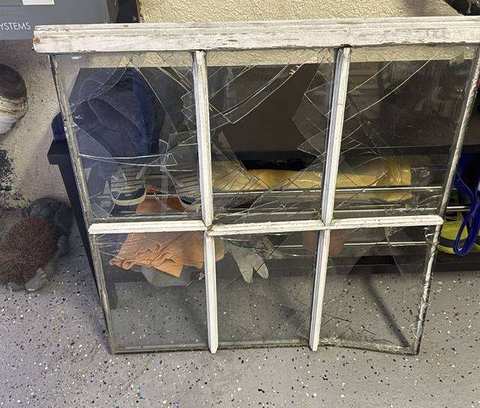 Before
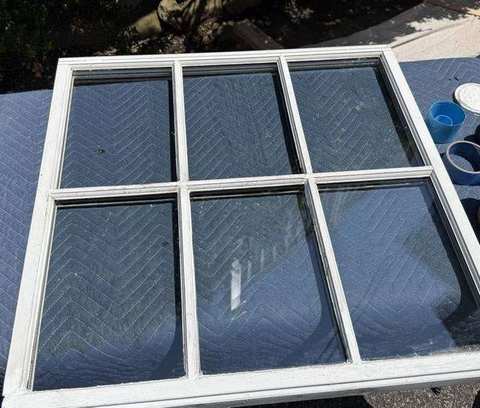 After
AfterExterior doors fail
from the ground up.
Stand at any weathered door in Westfield or West Caldwell and read it like a survey, bottom to top, and you'll find the failures stacked in the order gravity and water arranged them. Water lands on the threshold, splashes the frame legs, wicks into end grain, and works upward; wear starts where hands and feet concentrate and radiates out. That's why our exterior door assessments literally start at the sill and climb — and why this page walks the same route. Every stop on the tour is an independent repair; most doors need two or three of them, and almost none need what the symptoms whisper on a cold night, which is a whole new door.
Stop 1 — The threshold and sweep
The most stepped-on, rained-on component of the house. Thresholds cup, crack, work loose, and settle; sweeps shred; the joint between threshold and frame legs opens into the exact slot water loves. We repair or replace thresholds, re-bed and flash beneath them, and set sweep height so the door seals without dragging — the fix for both the under-door draft and the wet spot on the entry floor after storms.
Stop 2 — The frame base, where rot lives
Twelve inches up from the sill on each side is where New Jersey's freeze, thaw, and splashback do their patient work. Soft wood, bubbling paint, or a frame leg that crumbles at a fingernail means active rot — the signature failure of exterior doors, and the one we're best known for fixing. Decay is cut back to sound wood, rebuilt with structural epoxy or spliced lumber, and — the step that makes it permanent — the water path that fed it gets closed. Full detail at rotten door frame & sill repair.
Stop 3 — The sealing system
Weatherstripping at the jambs and head, the sweep below, and the geometry that lets them all compress evenly. This is where drafts, whistles, daylight at the corners, and a good share of winter heating loss actually live. Seals are renewed after the door is trued — order of operations is the whole trade here — and the payoff arrives the same evening, in a hallway that stops announcing the weather.
Stop 4 — Hinges, locks & hardware
Sagging hinges throw off everything above and below; worn locksets and strike misalignment turn locking into negotiation. We re-anchor, shim, and align — and we service the hardware other trades walk away from: mortise locks in older doors, multi-point mechanisms in newer ones, and the odd handles that no longer have a catalog page.
Stop 5 — The slab and the glass
Split panels, veneer lifting at the weather face, rot in a bottom rail, fogged lites and sidelites. Wood failures are bench work — our founding craft; glass failures are unit swaps covered under patio door glass replacement and glass replacement. A slab has to be far gone before replacement beats repair; when yours is, the honest framework for that decision lives at door replacement.
Stop 6 — The storm door out front
The overlooked bodyguard. A tuned storm door shields the entry door's finish and seals; a banging one racks itself apart and chews its frame. Closers, hinge rails, latches, sweeps, and panel gaskets are all fast, inexpensive service items — and they ride along free of trip charges with any other door repair on the visit.
For the doors that deserve more than repair — original pre-war entries with carved panels, sidelites, and hardware worth museum space — the deeper craft is historic door restoration. And for symptoms that don't sort neatly, the umbrella door repair page maps the whole territory.
The bottom-up assessment,
on your doorstep.
Photograph the door
Wide shot, frame base close-ups, and the threshold. Those three angles let us pre-diagnose most doors the same day, with a realistic range.
Answer same dayWalk the six stops
Onsite we survey threshold, frame, seals, hardware, slab, and storm door as one system — so one visit catches everything and nothing gets fixed twice.
Within 1–2 daysRepair in order
Geometry, then wood, then seals, then hardware — the sequence that makes each fix protect the next. Weathertight when we leave, warranted for five years.
1–2 weeksRather start with a conversation? (973) 564-0958 — Mon–Fri, 8 AM–6 PM. Serving Westfield, Chatham, West Caldwell & all of northern NJ.
Weather-side questions,
weathered answers.
Why is my front door suddenly drafty this winter?
Because a door's seal is a system, and one part of it has quietly retired. An exterior door only stops air where compressible weatherstripping meets the slab evenly on all four sides — and that evenness depends on geometry upstream. The usual suspects, in order: the weatherstripping itself has flattened or torn (it's a wear item with a service life far shorter than the door's); the door sweep at the bottom has worn through or the threshold beneath it has settled; or the door has sagged on its hinges so it no longer lands square against the stops, compressing the seal hard on one corner and not at all on the opposite one. Cold snaps expose all three at once because winter air pressure differences drive infiltration hardest exactly when you notice it most. The repair sequence matters: we correct the geometry first — hinges, then threshold — and only then fit new seals, because fresh weatherstripping on a crooked door seals nothing. Done in order, it's a single visit and the draft is gone that evening.
The bottom of my door frame is soft and the paint is peeling. How bad is that?
It's the most common serious problem on this page — and one of the most repairable. The bottom twelve inches of an exterior door frame live in the wettest microclimate on your house: rain splashback off the stoop, snow piled against the jamb, and water wicking up the end grain of the frame legs. Rot starts inside the wood behind intact-looking paint, so by the time the surface bubbles or a thumb sinks in, the decay has a head start. The good news: rot at the frame base almost never involves the door itself, and it concentrates exactly where targeted repair shines. We cut the decayed sections back to sound wood, rebuild with structural epoxy or spliced matching lumber, correct the water path that caused it — usually flashing or a gap at the threshold joint — and refinish. The full craft has its own page at rotten door frame & sill repair. What decides "bad": catching it while the rot is in the frame legs keeps it a modest repair; ignoring it for years lets decay reach the sill and subfloor, where the same fungus costs multiples more.
Do you repair storm doors, or is it cheaper to replace them?
We repair them, and usually it is — because storm doors rarely fail as a whole. They fail at four small points: the closer loses its damping and lets the door bang (or was never adjusted after installation); the hinge rail loosens where its screws strip out of the frame; the latch drifts out of alignment so the door won't stay shut in wind; and the sweep or glass/screen panels wear at their gaskets. Each is a parts-level fix costing far less than a decent new storm door installed. The honest exceptions: a frame bent by a wind-caught slam that racked the geometry, or corrosion through the hinge rail — those doors have structurally finished their careers, and we'll say so. One more thing worth knowing: a well-tuned storm door is quiet protection for the entry door behind it, adding an air gap and weather shield that measurably extends the main door's finish and seals. A banging one, by contrast, is slowly destroying itself and its frame. The difference is usually one closer adjustment we make in minutes as part of any exterior door visit.
Can my old French doors be made weathertight, or are they hopeless?
French doors are the hardest sealing problem in residential doors — and still very much a repair, not a hopeless case. The difficulty is inherent: two independently moving leaves must meet each other in mid-air at the astragal and both land square against the frame, so every bit of sag, warp, or hinge wear shows up as a gap somewhere along that meeting line. The repair sequence is stricter than for single doors: true each leaf on its hinges first, then align the astragal and the surface bolts or multi-point hardware that pull the leaves into line, then rebuild any rot at the sill — French door sills fail early because two leaves mean twice the joint length collecting water — and only then fit weatherstripping along the frame and the meeting stile. Old French doors in Chatham and Westfield homes reward this work: they're usually solid wood with true divided lites, and once trued and sealed they close with the satisfying doubled thunk their builders intended. If the glass itself has failed — fogged insulated units in newer French doors — that's a companion fix on our patio door glass replacement page, done in the same visit.
What does exterior door repair cost, and how fast can it happen?
Exterior door work spans the widest cost range on our doors menu, because the failures do: seal-and-sweep renewals sit at the bottom, hinge and threshold work in the middle, structural rot rebuilds at the top — and even the top lands around 80% less than the replacement project the same symptoms tend to trigger, which for entry systems starts at $10,000+ once frame, trim, and finishing are counted. Every estimate is written, itemized by failure, and free, with the replacement figure beside it for contrast. Speed runs on our standard clock: photos of the door, frame base, and threshold texted to (973) 564-0958 get an answer the same day; onsite assessment follows within 1–2 days; most repairs complete within 1–2 weeks, with seal-and-hardware visits usually done the day we arrive. Work is performed Mon–Fri 8:00 AM – 6:00 PM by a fully insured crew and carries our 5-year workmanship warranty. Seasonal advice from experience: draft complaints peak in January, but October is when the same repairs happen most pleasantly — for you and for the caulk.
Deeper cuts of
door work.
Winter found the gap.
We'll close it.
Three photos — door, frame base, threshold — and you'll know the same day which of the six stops failed and what fixing only those costs.