Window Spring Replacement
When a window spring snaps, the sash stops floating and starts falling. We match the exact spring system — spiral, coil, or cartridge — and put the tension back where it belongs.
replacement
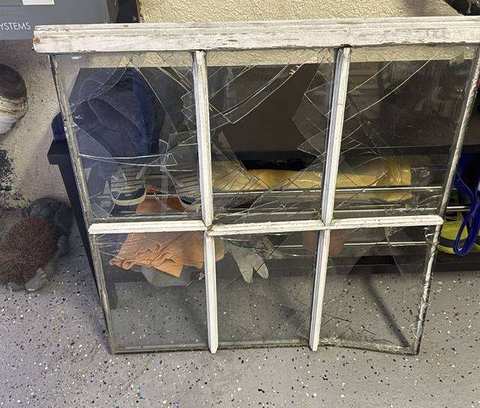 Before
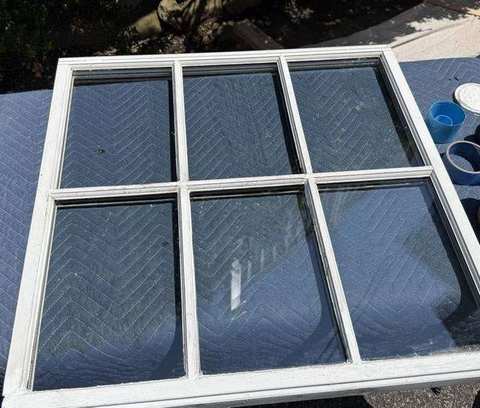 After
AfterA failed spring never
fails quietly.
The sash dropped
A loud snap, then the window fell — the spring released all at once. Stop using the window until it's serviced; a free-falling sash breaks glass and fingers.
Suddenly heavy
The window that lifted with two fingers now needs both arms. A spring has lost tension or detached on one side, leaving you to lift the sash's real weight.
Tilts or jams in the track
One side rises, the other drags. With one spring dead, the sash cocks sideways in its channels and binds — forcing it strips the surviving hardware.
Won't close the last inch
A detached spring or dropped balance shoe is physically blocking the channel. The fix is clearing and re-seating the mechanism, not slamming harder.
Recognize one? Describe it in 30 seconds and we'll name the failed part — free, the same day.
The spring is the muscle.
Everything else is linkage.
Every modern double-hung and single-hung window cancels its sash's weight with stored spring tension. The spring may drive a twisted spiral rod, work through a miniature block-and-tackle, or act directly as a coiled steel ribbon — but in every design, it is the only part doing work. Wood, vinyl, glass, and tracks just hold still; the spring lifts. So when a window in Livingston "gets old" — heavier every season, then one day refusing to stay open — the window hasn't aged at all. Its muscle has. And muscles, unlike windows, are replaceable.
This distinction is worth money. The replacement industry benefits every time a hardware failure gets read as a window failure, because the homeowner experiences something undeniably real — a window that doesn't work — and nobody at the sales appointment volunteers that the failure lives in a part. We're the second opinion that names the part. Most spring calls end with the original window working exactly as designed, at a cost that makes the replacement quote look like what it was.
What replacement actually involves
A proper spring replacement is a sequence, and the order matters. First, identification: we determine the spring system from the jamb hardware — spiral tube, tackle cartridge, or constant-force drum — because the three are not interchangeable and their parts don't cross. Second, rating: we weigh or calculate the sash weight, since springs are rated in pounds and a mismatch produces a window that either creeps down or launches up. Third, controlled release: the old spring still holds stored energy even when "failed," and it comes out under control, not with a pry bar. Fourth, paired installation: both sides get new springs, because the survivor has the same mileage as the casualty and has been running overloaded since its partner quit. Finally, tuning: spirals are wound to spec, shoes are seated, and the sash gets cycled through full travel until it floats at every height and the lock lands in alignment.
Springs, balances, cords — which page do you need?
- Modern window, sash won't stay up or dropped suddenly — you're on the right page. The spring inside a balance assembly has failed.
- You want the full mechanism story — spiral vs. block-and-tackle vs. constant-force, how they're matched and swapped: window balance repair & replacement.
- Pre-war window with pulleys at the top of the frame — that's a weight-and-cord system, no springs involved; re-corded the traditional way under window sash repair.
- Window sticks or binds but stays where you put it — that's friction, not tension: see window adjustment.
Mixed cases are common — a spring-failed sash that has also been forced and now binds — and one visit covers both. The point of the map is honesty: you should know which repair you're buying and why, before anyone quotes you anything.
The economics of a small part
Spring work is priced per window, parts plus labor, and it consistently lands around 80% below what replacing the affected windows would cost — the standing arithmetic of this company. The deeper value is what it prevents. A dropped sash left in service breaks glass and pinches hands; a heavy window gets forced, and forcing strips shoes, cracks stiles, and turns a hardware job into a wood repair. Homeowners in Montclair and Livingston who call at the first symptom routinely spend a fraction of what the same window costs six months of slamming later. Every job is done by a fully insured crew, backed by our 5-year workmanship warranty, on our standard clock: photo answered the same day, assessment within 1–2 days, repair complete within 1–2 weeks, Mon–Fri 8:00 AM – 6:00 PM.
Window spring replacement across Livingston, Montclair & northern NJ · Based in West Caldwell · (973) 564-0958
Everything under tension,
explained plainly.
Is a window spring the same thing as a window balance?
In everyday speech, yes — and we'll never correct you on the phone. Strictly, the spring is the power source and the balance is the whole mechanism built around it: a spiral balance is a spring driving a twisted rod, a block-and-tackle balance is a spring working through a pulley stack, a constant-force balance is the spring, a coiled steel ribbon doing the work directly. When homeowners search "window spring replacement," what has almost always happened is that the spring inside one of those assemblies has snapped or gone slack. Sometimes the spring alone can be re-tensioned or the assembly rebuilt; more often the economical fix is replacing the complete balance cartridge, since a spring that failed has usually taken its housing's tolerances with it. Either way, you don't need to know the vocabulary — describe the symptom, send a photo, and we'll bring the right part. The full mechanism story lives on our window balance repair page.
My sash dropped with a bang. Is it dangerous to keep using the window?
Yes — treat a dropped sash as out of service until it's repaired. With its counterbalance gone, the sash is fifteen to twenty-five pounds of free-falling frame and glass held up by nothing but friction and hope. The predictable injuries are pinched and broken fingers — usually a child's, usually at the meeting rail — and shattered glass when the sash slams the sill hard enough. There's a secondary risk people miss: the surviving spring is now overloaded, and when it lets go the release can be sharp enough to send the balance shoe or spiral rod snapping up the channel. Until we get there: close the window fully, lock it so nobody lifts it out of habit, and resist the urge to prop it open for air. This is one of the calls we genuinely prioritize — text a photo to (973) 564-0958, get an answer the same day, and we'll assess within 1–2 days.
Can I replace a window spring myself?
We're honest about this in both directions. Swapping some modern balance cartridges is within a confident DIYer's reach — if you can identify the exact type, length, and weight rating, source the correct part, and manage the stored tension safely. Those are three real ifs. Spiral balances have to be tensioned by winding them a specified number of turns against a loaded spring; block-and-tackle units arrive pre-tensioned and release violently if unhooked wrong; and a mismatched weight rating gives you a window that either won't stay up or won't come down. The failure mode of DIY spring work isn't a bad repair — it's bruised knuckles, a cracked pane, and a part order that was wrong twice. Our version: correct part matched by measurement and sash weight, both sides replaced, full-travel test, and a 5-year workmanship warranty on the workmanship. For what the visit costs against the afternoon it saves, most people in Livingston and Montclair stop at the second "if."
Why did my window spring fail in the first place?
Age and arithmetic. A window spring works every single time the sash moves, and it holds stored tension around the clock even when the window never opens — spring steel under permanent load slowly takes a set, the way a mattress does. Add temperature swings that work the metal, condensation in the jamb channels that corrodes it, and paint or debris that forces the spring to fight friction as well as gravity, and a service life of years — not forever — is simply what the physics allows. Failures cluster for the same reason: every balance in the house was installed the same week and has aged on the same schedule, so one snapped spring is usually the fleet's first domino rather than a fluke. That's why our visit includes a quick tension check of the neighboring windows if you want it — catching the next two failures while the ladder is already up costs far less than two more service calls.
What does window spring replacement cost?
It sits at the small end of window work — a parts-and-labor job priced per window, with the parts being modest hardware rather than glass or wood. The comparison that matters is the one the failure tends to trigger: a homeowner with three windows that won't stay open starts wondering about new windows, and whole-house replacement in our area starts around $23,000. Spring and balance service on those same windows runs roughly 80% less than replacing them — for windows that afterward work exactly as a new one would, because holding position is the one job a new window does that a spring-failed one doesn't. Every estimate is written, free, and itemized per window; the assessment happens within 1–2 days, most repairs finish well inside 1–2 weeks, and the crew is fully insured. Send the symptom, get both numbers, decide with the facts.
Hardware fixes for
good windows.
A snapped spring is a part.
Order the part, not the window.
Text a photo or video of the sash and we'll identify the spring system, the rating, and the cost — the same day, in writing, free.