Double Hung Window Repair
Two sashes, two counterbalances, one lock that ties them together. The double-hung is the most common window in New Jersey — and the most repairable. Whatever yours is doing wrong, it almost certainly has a fix that isn't a dumpster.
replacement
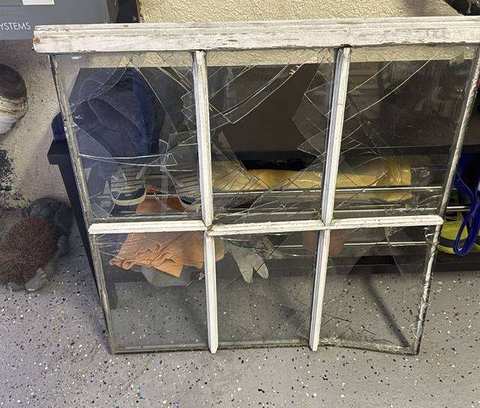 Before
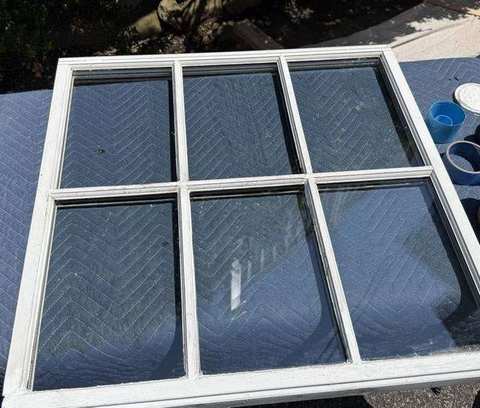 After
AfterThe most common window in New Jersey —
and the most fixable.
Walk any street in Montclair, Maplewood, or Westfield and count the windows: most of them are double-hungs — two sashes stacked in one frame, each sliding vertically past the other. The design has dominated American houses for two centuries for a simple reason: it works, and when it stops working, it can be put right. Every component that fails in a double-hung — the cords, the balances, the beads, the stops, the lock, even a rotted rail — was built to come out and be renewed. Replacement companies treat that as a rounding error. We treat it as the whole job.
The failures that make people call us
A double-hung announces its problems clearly once you know its language. A bottom sash that slams shut the moment you let go has lost a cord or a balance. A top sash that drifts down from the frame head — leaving that cold seam you can feel above the lock — has lost its own. Sashes that travel together when they should travel separately are paint-bridged or missing parting beads. A lock that won't reach its keeper means the meeting rails no longer align, which is a fit adjustment, not new hardware. And soft, darkened wood at those meeting rails — the spot almost nobody checks — is condensation rot that's been working in private, usually around the lock screws where end grain drinks water.
None of these failures involves the two components that make a window expensive: the glass and the bulk of the wood. That's why repairing a double-hung costs so much less than replacing one, and why we built a company on the difference.
Both sashes, or the whole house — scoped honestly
Because a double-hung is really two windows sharing a frame, we always service it as a pair. Fixing the bottom sash's balance while the top sash hangs on a frayed cord just schedules the next service call, and re-weatherstripping around a lock that doesn't compress the rails wastes the weatherstrip. Our assessment covers both sashes, all four tracks, the lock geometry, and a probe of the sill and rails for hidden decay — then the written scope lists what each window actually needs and skips what it doesn't. On whole-house tune-ups across Essex, Morris, and Union counties, that usually means a mix: cords here, balances there, one or two rot rebuilds, weatherstripping throughout. You approve the scope line by line.
Double hung window repair across Montclair, Maplewood, Summit, Westfield, Livingston & northern NJ · West Caldwell, NJ · Mon–Fri 8:00 AM – 6:00 PM · (973) 564-0958
A whole-house double-hung replacement project — routinely proposed to homeowners whose windows needed cords, balances, or one rebuilt rail.
Every window billed for one window's problemThe failed system serviced — counterbalance, fit, lock, or rot — at about 80% less than replacement, with our 5-year workmanship warranty.
Both sashes gliding, locking, sealingDiagnosed by photo.
Fixed by hand.
Show us the window
Text a photo or short video — the sash that slides, the lock that misses, the soft spot at the rails. We identify the failed system remotely in most cases.
Answer same dayWhole-window check
Onsite we test both counterbalances, the tracks, the meeting rails, and the lock — and probe for hidden rot — so you get one written scope, not repeat visits.
Within 1–2 daysService every failure at once
Cords, balances, beads, rot rebuilds, weatherstripping — handled in one job, so the window works as a complete system again.
1–2 weeksPrefer to talk first? Call (973) 564-0958 — Mon–Fri, 8 AM–6 PM.
Where double-hungs fail:
a map by altitude.
Read your window from top to bottom and the likely diagnosis reads itself.
At the top: a top sash that creeps down, or pulleys seized under paint — counterbalance failure on the upper sash. At mid-window: the meeting rails. This is the double-hung's crossroads — where the sashes overlap, where the lock cams together, where paint bridges glue the pair into one panel, and where winter condensation quietly starts rot around the lock screws. Most "it rattles," "it won't lock," and "there's soft wood at eye level" complaints live here. In the tracks: jamb channels narrowed by paint, worn parting beads letting the sashes rub — the friction and wobble problems. At the bottom: the classic won't-stay-open sash, and the bottom rail where wind-driven rain tests the glazing joint.
We treat each zone with its own craft — mechanical service for the counterbalances and tracks (covered in depth on our window sash repair page), joinery and epoxy work where decay has started (see rotten sash repair), and hardware tuning at the lock so the meeting rails actually compress and seal. One visit, all four altitudes.
Top sash, bottom sash, and everything they touch — serviced as one machine.
Asked about the two-sash window,
answered plainly.
My top sash keeps creeping down. Is that the same problem as a bottom sash that won't stay up?
Same family of problem, opposite direction. Both sashes of a double-hung hang on their own counterbalance — cords and iron weights in older houses, spring balances in newer ones. When the bottom sash loses its counterbalance, gravity wins and it slides shut. When the top sash loses its counterbalance, gravity wins the other way: it creeps down from the head of the frame and leaves a draft gap you can feel from across the room. Many homeowners never realize the top sash is supposed to move at all, so they wedge it with a shim and live with the gap. We service the top sash exactly the way we service the bottom one — re-hang the cords or swap the balances — and it parks at the head of the frame and stays there. If the sash itself is fine and only the mechanism failed, the fix is quick; see our window balance repair page for how the swap works.
Both sashes move together when I open the window. What went wrong?
That's a fit problem, not a ghost. Two things cause it. First, paint: layers of it bridge the meeting rails — the horizontal rails where the two sashes overlap at mid-window — effectively gluing the pair into one panel, so lifting one drags the other. Second, worn parting beads: the thin vertical strips that keep the two sashes in separate tracks wear down or fall out, and the sashes start rubbing and riding on each other. Both fixes are mechanical. We separate the rails cleanly, replace missing or worn parting beads, dress the tracks, and the two sashes go back to traveling independently — which is the whole point of a double-hung. It also restores the feature people forget: cracking the top sash and the bottom sash a few inches each sets up natural convection that ventilates a room with no fan.
Why is there soft, dark wood in the middle of my window where the two sashes meet?
Meeting-rail rot — the double-hung's signature blind spot. Homeowners check the sill and the bottom rail for rot because that's where rain lands, but the meeting rails have their own moisture source: condensation. Warm indoor air hits the coldest line of the window — the overlap where two single thicknesses of wood and a lock plate meet — and water condenses there all winter, wicking into end grain around the lock screws. Because the spot sits at eye level behind a curtain of hardware, it rots quietly for years. The repair is the same craft we use everywhere else: dig out the decayed fiber, consolidate what's sound, rebuild the rail with structural epoxy or a spliced-in section of matching wood, re-mount the lock into solid material. Read rotten window sash repair for the full method — the meeting rail is simply its least famous location.
Are old double-hung windows actually worth repairing instead of replacing?
Usually, yes — and not out of nostalgia. A double-hung made before the 1950s is typically old-growth wood: denser, more rot-resistant, and more dimensionally stable than the fast-grown stock in most new sash. Every part of it was designed to be serviced — cords, beads, stops, glazing all come apart and go back together, which is why these windows are still here a century later. A repaired and weatherstripped original gives you smooth travel, a lock that pulls the meeting rails tight, and decades more service, at roughly 80% less than a replacement unit. When a window genuinely is too far gone — rot through the joints, a frame out of square — we say so in writing, with the repair number and a realistic replacement number side by side. That honest math is the entire pitch.
What does double-hung repair cost and how long does it take?
It depends on which of the window's systems failed, but the pattern holds across all of them: repair runs about 80% less than replacing the unit. Balance and cord work sits at the low end, freeing and tuning mid-range, meeting-rail rot rebuilds at the top — and even those stay far below the four-figure installed price of one new window. Timeline is fast because diagnosis is fast: text a photo or a short video of the misbehaving window to (973) 564-0958 and you'll have an answer the same day. Onsite assessment happens within 1–2 days, and nearly every double-hung repair is done within 1–2 weeks of approval. Every job carries our 5-year workmanship warranty, and RotGone is fully insured.
The specialist pages behind this one.
Send us a photo — get a real answer today
Tell us what's going on and attach a picture of the damage. We'll tell you honestly whether it's rot, whether it can be repaired, and roughly what it costs.
One window, two sashes —
zero reasons to replace it yet.
Text a photo of the double-hung that's misbehaving. We'll tell you which of its systems failed, what the repair costs, and what replacement would run — the same day.