Casement Window Repair
A casement lives a harder life than any other window: it hangs its weight on hinges, opens by gearbox, and swings its wood out into the rain. We service all three habits — cranks, hinges, sag, and the rot they lead to — including the 1990s casements everyone else refuses.
replacement
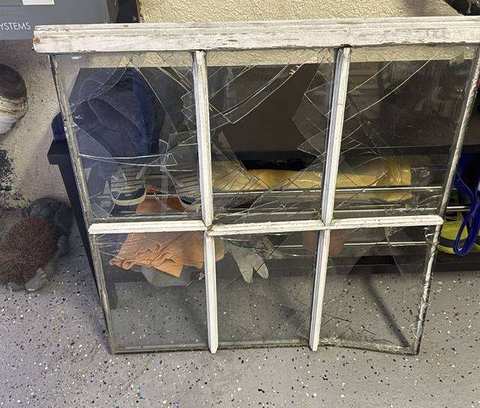 Before
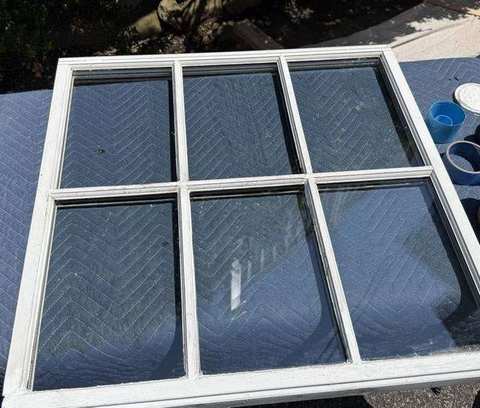 After
AfterHinges, a gearbox, and weather-facing wood:
the casement's three hard jobs.
A double-hung slides in a sheltered track. A casement does everything the hard way: it carries its full sash weight on side hinges like a door, opens and closes through a geared crank operator, and swings its wood and glass out into whatever the sky is doing. Each of those jobs creates its own failure over time — and each failure has convinced some homeowner in Livingston or Chatham that the window is finished. It almost never is. The crank, the hinges, and even the weather-beaten bottom rail are all serviceable; what's rarely necessary is discarding the sash and frame they're attached to.
How a casement asks for help
- Crank spins freely, sash stays put — stripped operator gears; the gearbox gets matched and replaced, and the cause of the strain corrected
- Crank is hard to turn — the sash is dragging or the hinge track is seized; forcing it is what strips gears
- Sash scrapes at the lower lock-side corner — hinge sag; the hang gets rebuilt, not just the corner shaved
- Wind whistles at the latch side — the sash no longer compresses its gasket; alignment and lock adjustment restore the seal
- Soft or dark wood along the bottom rail — the weather-exposed rail is rotting at its end-grain corners; epoxy and splice work rebuilds it
- Fog between the panes — the sealed glass unit failed; the glass swaps, the sash stays
Notice what's absent from that list: any failure that requires a new window. The expensive parts of a casement — the frame, most of the sash, the glass (fog aside) — are almost never what breaks. What breaks is hardware and the wettest twelve inches of wood, and both are exactly what a repair company services.
The windows other companies walk away from
There's a generation of casements — roughly the 1980s through the 1990s — that the industry has quietly orphaned. Manufacturers rotate hardware out of their catalogs, showrooms have no incentive to hunt for equivalents, and so homeowners hear the same sentence from every truck in the driveway: parts are no longer available, you'll want to replace. We've built a reputation on being the call after those calls — the company that identifies the orphaned operator, sources or adapts the match, rebuilds the rotted rail, and leaves the original window working. Our Google reviews tell that story repeatedly, and it's why "they said it couldn't be fixed" is our favorite way for a conversation to start.
Casement window repair across Livingston, Chatham, Madison, Montclair, Summit & northern NJ · West Caldwell, NJ · Mon–Fri 8:00 AM – 6:00 PM · (973) 564-0958
Bring us the window
everyone else turned down.
Photo the crank & the corner
Two pictures tell most of the story: the operator hardware and the sash's lower corners. Add a video of the crank misbehaving if it's mechanical.
Answer same dayIdentify hardware, probe the wood
Onsite we type the operator and hinges — including discontinued patterns — and probe the bottom rail and frame for hidden decay. You get one written scope.
Within 1–2 daysRebuild, rehang, re-crank
Hardware matched and mounted, sag corrected, rot rebuilt, seals renewed. The sash swings clear, cranks smoothly, and pulls tight against its gaskets.
1–2 weeksPrefer to talk first? Call (973) 564-0958 — Mon–Fri, 8 AM–6 PM.
"Parts don't exist" usually means
"we didn't look."
Casement hardware looks proprietary. Mechanically, it isn't — and that's the crack in every replacement pitch.
Casement operators across brands and decades reduce to a handful of mechanical families — the shoe that slides in a track, the single arm that scissors, the dual arm that pushes. Hinges likewise. When a manufacturer drops a part from its catalog, the geometry doesn't vanish from the world: current-production equivalents exist for the vast majority of vintage patterns, and the remainder can usually be adapted with careful fitting. Our job is identification — measure the arm lengths, the mounting footprint, the handedness — and then sourcing or adapting the match.
The wood side is even simpler, because wood never gets discontinued. A rotted bottom rail on a 1994 casement gets the same craft as one on a 1924 sash: excavate, consolidate, rebuild with structural epoxy or a spliced dutchman, seal, finish. The methods live on our epoxy wood repair and dutchman repair pages; the point here is that they apply to "too new to restore, too old to buy parts for" windows exactly as well as to landmarks. If the glass has fogged, the sealed unit swaps too — see foggy glass replacement.
Mechanics, geometry, and wood craft — the three skills that make 'unrepairable' casements repairable.
Five reasons casements get replaced —
and why none holds up.
The crank spins but the window doesn't move. Is the whole window shot?
No — you've stripped the operator, the little gearbox the crank handle turns. It's the hardest-working part on a casement and the first to go, especially when years of paint or a swollen sash made every opening a fight and the gears paid the price. The operator is a replaceable component: we identify the type — sliding-shoe, split-arm, dual-arm — match a correct replacement, and mount it. While we're in there we find out why it stripped, because operators rarely die of old age alone. A dragging sash or seized hinge overloads the gears, and if that isn't corrected the new operator inherits the same fight. That's the difference between swapping a part and repairing a window; we do the second.
My casement drags and scrapes at the bottom corner when it closes. What causes that?
Sag. A casement hangs its whole weight off hinges on one side, like a door — so over the years the unhinged corner drops, and the sash starts scraping the frame at the bottom of the lock side. Wear in the hinge arms and track, loose hinge screws chewed out of the wood, and moisture-swollen wood all contribute. The repair is a sequence: re-secure or replace the hinge hardware, rebuild screw holes stripped out of the frame with solid wood so the screws bite again, and true up the sash's fit so it swings clear. Planing away the scraped corner alone is cosmetic surgery on a structural problem — the sag continues and the scrape comes back. Fix the hang first, then dress the fit.
Why did the bottom of my casement sash rot when the rest of the window is fine?
Because of how a casement lives. When it opens, the sash swings out into the weather like a little door — and rain that hits the glass runs straight down and collects along the bottom rail. Closed, that same rail sits directly above the sill gasket, where wind-driven rain and condensation drain to. The bottom rail is simply the wettest piece of wood on the window, and its corner joints are end grain — the part of wood that drinks water fastest. So the classic casement rot pattern is a sound sash with two soft lower corners. It's very repairable: we cut out the decay, consolidate the transition zone with penetrating epoxy, rebuild the corners with structural fill or spliced-in matching wood, then re-seal so the rail sheds water again. The glass, the operator, and three-quarters of the sash never knew there was a problem.
My casements are from the 1990s and every company says parts don't exist. Do you actually repair them?
Yes — this is one of our specialties, and it's where we win customers other companies send away. Casements from the 1980s and 1990s sit in an awkward gap: too new to be "restoration," too old for the manufacturers' current parts catalogs, so the standard industry answer is a replacement quote. But the hardware on those windows follows a small number of mechanical patterns, and nearly all of it can be cross-matched to current equivalents or adapted with minor machining. Where the wood has rotted, wood is wood — our epoxy and splicing methods don't care what decade the sash was made in. Homeowners regularly tell us we were the only company willing to say "that's repairable" after multiple no's, including from the original manufacturer. If someone has already told you no, that's exactly the window to text us a photo of.
What does casement repair cost compared with replacing the window?
The economics lean even harder toward repair than usual, because casements are among the most expensive window types to replace — and their most common failures are among the cheapest to fix. An operator, a hinge set, or a rebuilt bottom-rail corner costs a fraction of a new casement installed, and our repairs across the board run about 80% less than replacement. You get a written scope after a free onsite assessment (scheduled within 1–2 days of your call or photo), most work is completed within 1–2 weeks, and everything carries our 5-year workmanship warranty. RotGone is fully insured, based in West Caldwell, and reachable Mon–Fri 8:00 AM – 6:00 PM at (973) 564-0958 — a photo of the window gets you an answer the same day.
Often needed on the same casement.
Send us a photo — get a real answer today
Tell us what's going on and attach a picture of the damage. We'll tell you honestly whether it's rot, whether it can be repaired, and roughly what it costs.
Told your casement is
"not worth fixing"?
Text us a photo of the crank and the sash corners. We'll tell you what the hardware is, whether the wood is savable, and what both paths cost — the same day.