Awning Window Repair
The window you can leave open in the rain — until the crank stiffens, the gaskets flatten, or water finds the one thing awning windows can't avoid: horizontal wood. All three are repairs, not replacements.
replacement
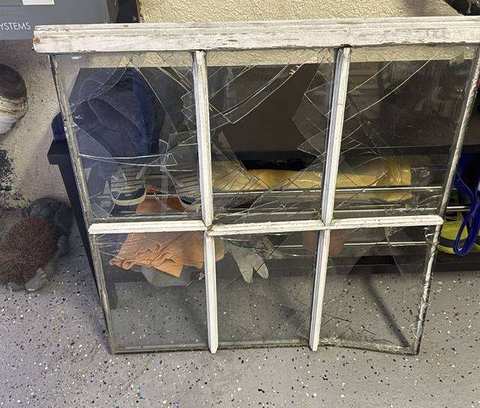 Before
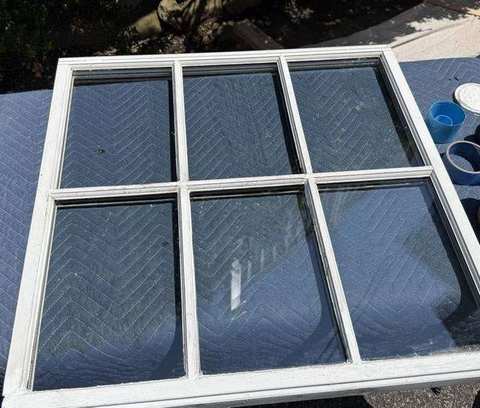 After
AfterGravity is kind to awning windows.
Water is not.
Awning windows are the practical ones — cranked open over a kitchen sink in Verona, ventilating a basement in Caldwell, riding high in a mid-century living-room wall in Livingston. Hinged at the top, tilting out at the bottom, they're the only window you can confidently leave open during a summer rain. But the same tilted-out geometry that sheds rain when open concentrates every long-term problem along the window's horizontal surfaces when closed: the sash's bottom rail, the sill beneath it, the lower gasket line. Water that would slide off a vertical double-hung stile simply sits there, working on the finish, then the fiber. Meanwhile the scissor-arm hardware that does all the lifting quietly wears at its pivots. The result is a very predictable service profile — and a very repairable one.
The three ways awning windows age
Mechanically: the crank stiffens as decades of grit and hardened lubricant bind the scissor arms, then the operator gears strip when someone muscles through the resistance. Both stages are serviceable — freeing and lubricating early, hardware matching and replacement later, including for discontinued patterns. At the seals: an awning window seals by compression, the sash pulled up against gaskets by its operator and locks; hardened gaskets, worn arms, and drifted lock cams each cost you a fraction of that compression until the draft appears. Gasket renewal plus adjustment restores it. In the wood: the horizontal rail and sill collect standing water, announce trouble as a dark mildew line, then soften as decay starts — the stage where our epoxy consolidation and splicing rebuild the original wood in place, detailed on our wood window repair page.
Why we probe the sill even when you called about the crank
On awning windows the mechanical and moisture stories are usually the same story. A sash whose bottom rail has begun to swell with moisture drags against the frame; the homeowner cranks harder; the operator strips — and the "broken crank" that prompted the call traces back to a wet rail nobody had noticed. So our assessment always covers both systems: hardware worked through its travel, and every horizontal surface probed for softness, including the sill and the frame's lower corners where trouble spreads next (that progression belongs to sill and trim rot repair). You get one written scope with the true cause identified — which is how a repair stays repaired.
Awning window repair across Caldwell, Verona, Livingston, Montclair, Summit & northern NJ · West Caldwell, NJ · Mon–Fri 8:00 AM – 6:00 PM · (973) 564-0958
Awning windows are usually odd sizes — over sinks, in basements, high in walls — so replacement means a custom-built window plus installation for one small opening.
Big-window money for a small windowHardware freed or matched, gaskets renewed, the wet rail rebuilt — about 80% less than replacement, backed by our 5-year workmanship warranty.
Cranks easy, seals tight, sheds waterThe same care we give
a landmark — at sink height.
Photograph the bottom edge
The sash's lower rail and the sill under it are where awning windows tell the truth. One photo each, plus a video if the crank is acting up.
Answer same dayAssess hardware and wood together
We work the linkage, check the operator gears, test the compression seal, and probe every horizontal surface for early decay.
Within 1–2 daysTune, rebuild, reseal
Linkage freed or replaced, rot rebuilt in place, gaskets and weatherstrip renewed, locks adjusted until the sash pulls home tight.
1–2 weeksPrefer to talk first? Call (973) 564-0958 — Mon–Fri, 8 AM–6 PM.
The top-hinged window,
explained from the bottom up.
What exactly is an awning window, and why does mine fail differently from my other windows?
An awning window hinges at the top and tilts outward from the bottom, so the open sash slopes over the opening like a little awning — that's the name and the appeal: you can leave it open in the rain and the glass sheds the water away from the house. The same geometry defines how it fails. All of the hardware effort happens at the bottom edge (the operator pushes the sash out from there), so that's where mechanical wear concentrates. And when the window is closed, every one of its critical surfaces — the bottom rail, the sill below it, the frame's lower gasket line — sits horizontal, which means water that reaches them stays on them. Vertical wood sheds; horizontal wood soaks. Awning windows are wonderful ventilators and patient little rot farms, and repairing them means addressing both personalities.
The window is stiff and the handle takes two hands to turn. Can that be serviced?
Yes, and sooner is much cheaper than later. Awning sashes ride on scissor-style hinge arms at each side, driven by a crank or push-bar operator at the base. Decades of grit, hardened grease, and corrosion stiffen the pivots; paint drips glue the arms; and the operator's gears start absorbing the extra load. Stiffness is the early warning — the stage where cleaning, freeing, and lubricating the linkage plus truing the sash's fit solves it. Keep cranking a stiff window and the gears strip, which turns a service visit into a hardware replacement. Either way it's repairable: worn operators and hinge arms are matched and replaced just like any hardware, including patterns no longer in the manufacturer catalogs. But if yours has gotten stubborn this season, this is the cheap moment to call.
There's a black line and soft wood along the bottom edge of the sash. How bad is that?
That's the awning window's signature wound, and caught at the "black line" stage it's very fixable. The dark streak is mildew and saturated finish where water has been sitting along the horizontal rail; soft wood under a fingernail means decay has started in the fiber beneath. Because the rail is the sash's structural bottom chord — and because the operator hardware anchors into it — you don't want to watch it progress. The repair follows our standard rot craft: excavate the decayed material, stabilize the surrounding wood with penetrating consolidant, rebuild the rail's profile in structural epoxy or spliced wood, re-anchor the hardware into sound material, and refinish so the surface sheds rather than absorbs. The sash stays, the glass stays, the hardware goes back on. Left alone instead, the rot migrates from sash to sill to frame — and that's a bigger page: see rotten window frame repair.
My awning window won't pull tight anymore and I feel a draft at the bottom. New window?
Almost certainly not. A tight awning window is a compression fitting: the operator and locks pull the sash up against gaskets around the frame. Three things loosen that grip over time — the gaskets themselves harden and flatten, the hinge arms wear enough that the sash sits a hair proud, and the locking cams drift out of adjustment. Each has a direct fix: fresh gasket and weatherstripping material, hardware service or replacement, and lock re-adjustment so the cams actually draw the sash home. We do all three as one tune-up and test the result. Drafts are a seal problem, and seals are consumables — replacing a window because its gaskets flattened is like replacing a car because its wipers streak.
What does awning window repair cost, and is a small window even worth it?
Small windows are the ones most worth repairing, because the replacement math is at its silliest there: awning units are often custom sizes (they're favorites over kitchen sinks, in basements, and in mid-century walls), so a replacement means a made-to-order window plus installation — real money for a small opening. The repair — hardware, seals, or a rebuilt rail — runs about 80% less. Our process is the same as for any window: text a photo to (973) 564-0958 for a same day answer, free onsite assessment within 1–2 days, written scope, and most repairs finished within 1–2 weeks. The work carries our 5-year workmanship warranty, and RotGone is fully insured. We're in West Caldwell, Mon–Fri 8:00 AM – 6:00 PM.
Catch it here, or fix it there.
Send us a photo — get a real answer today
Tell us what's going on and attach a picture of the damage. We'll tell you honestly whether it's rot, whether it can be repaired, and roughly what it costs.
Stiff crank? Black line on the rail?
That's a service call, not a quote for a new window.
Text a photo of your awning window's bottom edge and hardware. We'll tell you what it needs and what it costs — same day, no visit required for the answer.