Sierra Pacific Window Repair
Built by a lumber company that grows its own trees — Sierra Pacific's clad-wood windows have good bones. We repair the component that failed, at about 80% less than replacement.
replacement
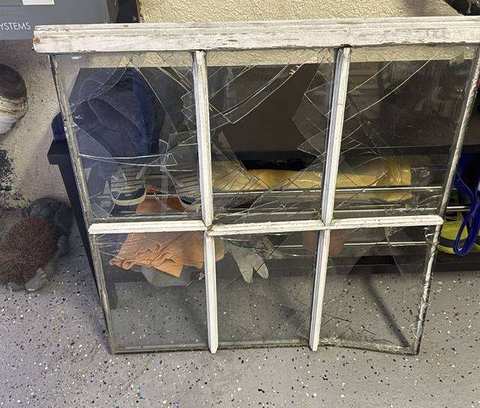 Before
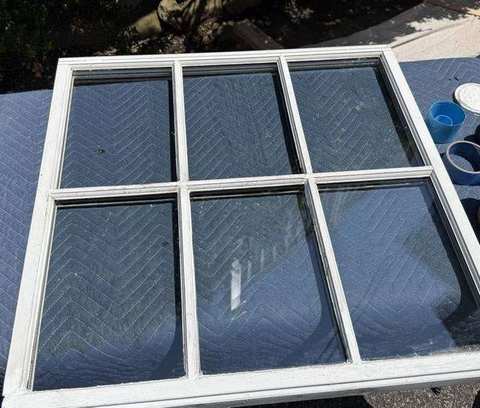 After
AfterA lumber company's windows, a wood shop's repairs
Sierra Pacific windows come with a detail most homeowners don't know: the manufacturer is first and foremost a lumber company — one of the largest in the country — building windows from wood it grows and mills itself. For a repair shop, that pedigree shows up in practice. The wood cores in Sierra Pacific's aluminum-clad units are consistent and sound, the kind of substrate that takes epoxy consolidation and spliced repairs predictably. When one of these windows fails in northern New Jersey, it fails the way premium clad-wood fails everywhere: at a component, quietly, while the rest of the unit stays excellent. That's a repair scenario, not a replacement scenario, and the economics agree — component repair typically runs about 80% less than swapping the unit.
The failure map we see in the field
Four patterns cover nearly every Sierra Pacific call we take. First, clad-joint moisture: aged sealant at a corner, sill, or jamb interface lets water behind the aluminum, and the damage develops out of sight — the reason we probe rather than trust surfaces. Second, exposure wear at rails and sills, the universal wood-window pattern, concentrated on south- and west-facing elevations. Third, fogged insulated glass, the sealed unit's edge seal reaching the end of its service life — a glass swap, not a window project. Fourth, hardware wear on older units — operators, locks, and balances that stiffen or strip with cycles. We commonly find two of these on the same window, which is why our assessment covers the whole unit: one visit, one scope, no second discovery halfway through.
Why repair suits these windows specifically
Sierra Pacific installations tend to be matched runs — a wall, a floor, or a whole addition of units sharing profiles, cladding color, and sightlines. Replace one unit and the substitute has to match all of that, from a catalog that may have moved on. Repair keeps the run intact by definition. It also keeps the money proportionate: the failed component is a small fraction of the window's value, and the repair prices accordingly — with both numbers shown on our estimate so you can verify the gap yourself. Work is done by a fully insured crew and covered by our 5-year workmanship warranty.
The way in
Text a photo to (973) 564-0958 — the stained sill, the fogged pane, the trim that's gone soft. Answer the same day; onsite assessment within 1–2 days; repairs complete within 1–2 weeks. We run this route through Montclair, Glen Ridge, Millburn, Summit, and Morristown every week from our West Caldwell base — your windows would be in familiar company.
Sierra Pacific window repair for Montclair, Glen Ridge, Millburn, Summit, Morristown & all of northern NJ · West Caldwell HQ · Mon–Fri 8:00 AM – 6:00 PM · (973) 564-0958
A new installed clad-wood unit is four figures per opening — ordered because one joint leaked or one glass seal failed.
Factory pricing for a field-fixable problemRepair the wood, re-seal the joint, swap the IGU — 80% less, with a 5-year workmanship warranty.
Good bones, keptLook behind the aluminum
before writing anything off.
Photo triage
Text photos of the symptom — staining, soft trim, fogged glass. Same-day read on what's likely happening behind the surface.
Same dayAssessment
We probe wood at the vulnerable joints, inspect clad interfaces and glazing seals, and map the true extent of any moisture damage.
Within 1–2 daysRepair & re-seal
Wood rebuilt, entry points corrected, cladding re-seated, glass replaced where seals failed. Water sheds the way it should.
1–2 weeksPrefer to talk first? Call (973) 564-0958 — Mon–Fri, 8 AM–6 PM.
Clad windows fail quietly.
We listen earlier.
Aluminum cladding is excellent protection and an excellent hiding place. Repairing clad-wood means respecting both facts.
Sierra Pacific is unusual among window makers: it's part of one of America's largest lumber operations, a vertically integrated company that controls its wood from forest to frame. The windows — aluminum-clad wood across the range — reflect that: solid cores, consistent stock, sensible construction. In our service area they appear mostly in renovations and new builds of the last two decades, from Montclair to Morristown, usually in matched runs where every unit shares profiles and finish.
The repair story for these windows is the clad-wood story generally. The aluminum shell keeps sun and rain off the wood for decades — but where cladding sections meet, at corners and sills and jamb interfaces, sealant ages. Water that gets past an aged joint sits against wood in a space that never dries, and the first interior symptom often appears seasons after the leak began. Our protocol: find the entry, expose the damage fully, rebuild the wood with epoxy or spliced stock, correct the joint, re-seat the cladding. Fogged glass and worn hardware are handled in the same visit. The unit goes back to doing what it was built for — at about 80% less than replacing it.
Find the leak, fix the wood, close the entry — in that order, every time.
Clad-wood questions,
answered from the field.
Will repairing my Sierra Pacific window void the warranty?
No. A repair done properly doesn't void what remains of the manufacturer's warranty on other components — rebuilding a sill or replacing a fogged glass unit has no bearing on coverage that still applies elsewhere in the window. Many windows we repair are already past their warranty age regardless, at which point the question is purely economic: component repair versus unit replacement, a comparison repair typically wins by about 80%. Our workmanship carries its own 5-year workmanship warranty, and the crew is fully insured.
Water is getting behind the aluminum cladding on my Sierra Pacific window. Is that fixable?
Yes — it's the classic clad-wood repair, and we do it constantly across brands. We lift or remove the affected cladding section rather than working blind, expose the wood behind it, and repair the decay with penetrating epoxy consolidation or a spliced-in section of matching stock. Then the critical step: we correct the entry point — the aged sealant joint, the open corner, the sill interface — before re-seating and re-sealing the aluminum. Repairing the wood without closing the entry is a repair with an expiration date; doing both is why ours carries a 5-year workmanship warranty.
Can you replace fogged glass in a Sierra Pacific window without replacing the sash?
In nearly every case, yes. Fog between panes is a failed insulated glass unit — a sealed-glass problem independent of the wood and cladding around it. We measure the IGU, order a matching unit with the correct thickness and spacer profile, and glaze it into your existing sash. The window keeps its sightlines, its finish, and its place in a matched wall of units. Text a photo of the fogged pane and we'll confirm the approach and a price range the same day.
What typically fails on Sierra Pacific clad-wood windows?
The pattern we commonly see in the field is the standard clad-wood set: aged sealant at clad-to-wood joints letting moisture behind the aluminum, where it works on the wood unseen; weathering at sash bottom rails and sill areas on exposed elevations; insulated glass seals fatiguing on sun-heavy glass; and normal hardware wear on older units. The wood core itself is usually sound — Sierra Pacific is a lumber company at its root, and it shows. Every item on that list is a component repair.
Repair or replace — how should I decide for Sierra Pacific windows?
Get both numbers, then decide. Component repair typically runs about 80% less than unit replacement, keeps your profiles matched across the wall, and finishes within 1–2 weeks instead of a factory-order cycle. Replacement makes sense mainly when a unit has multiple simultaneous failures and structural decay past the point of economical rebuilding — a minority of cases, in our experience. We put the repair estimate next to a realistic replacement figure on every quote, and our assessment happens within 1–2 days, so the decision comes fast and informed.
Component pages, one craft.
Send us a photo — get a real answer today
Tell us what's going on and attach a picture of the damage. We'll tell you honestly whether it's rot, whether it can be repaired, and roughly what it costs.
One leaking joint isn't
a condemned window.
Send a photo of the stain, the soft spot, or the fog. We'll tell you what's really happening — and what fixing only that costs.